
words & photos by Marsha Tulk
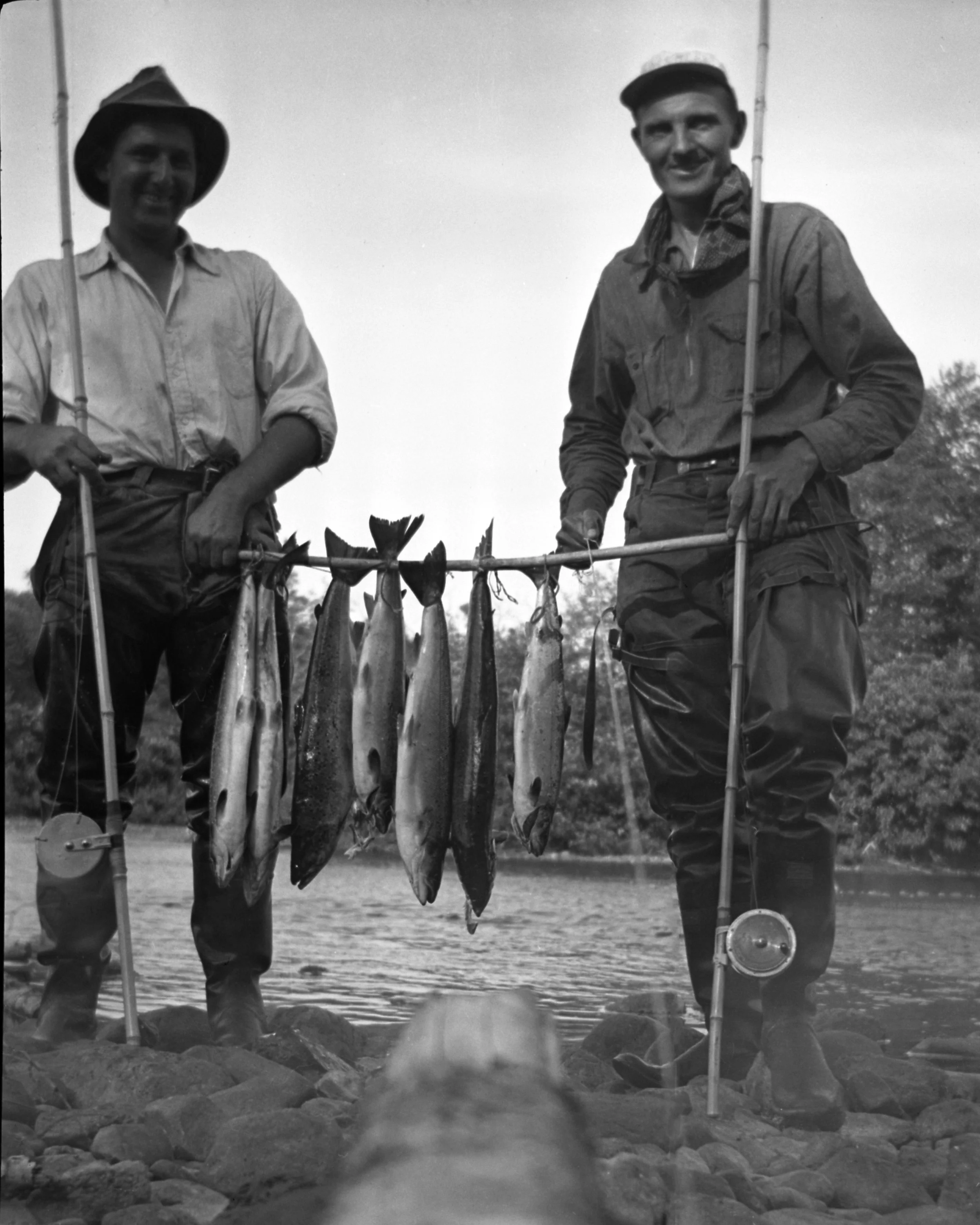
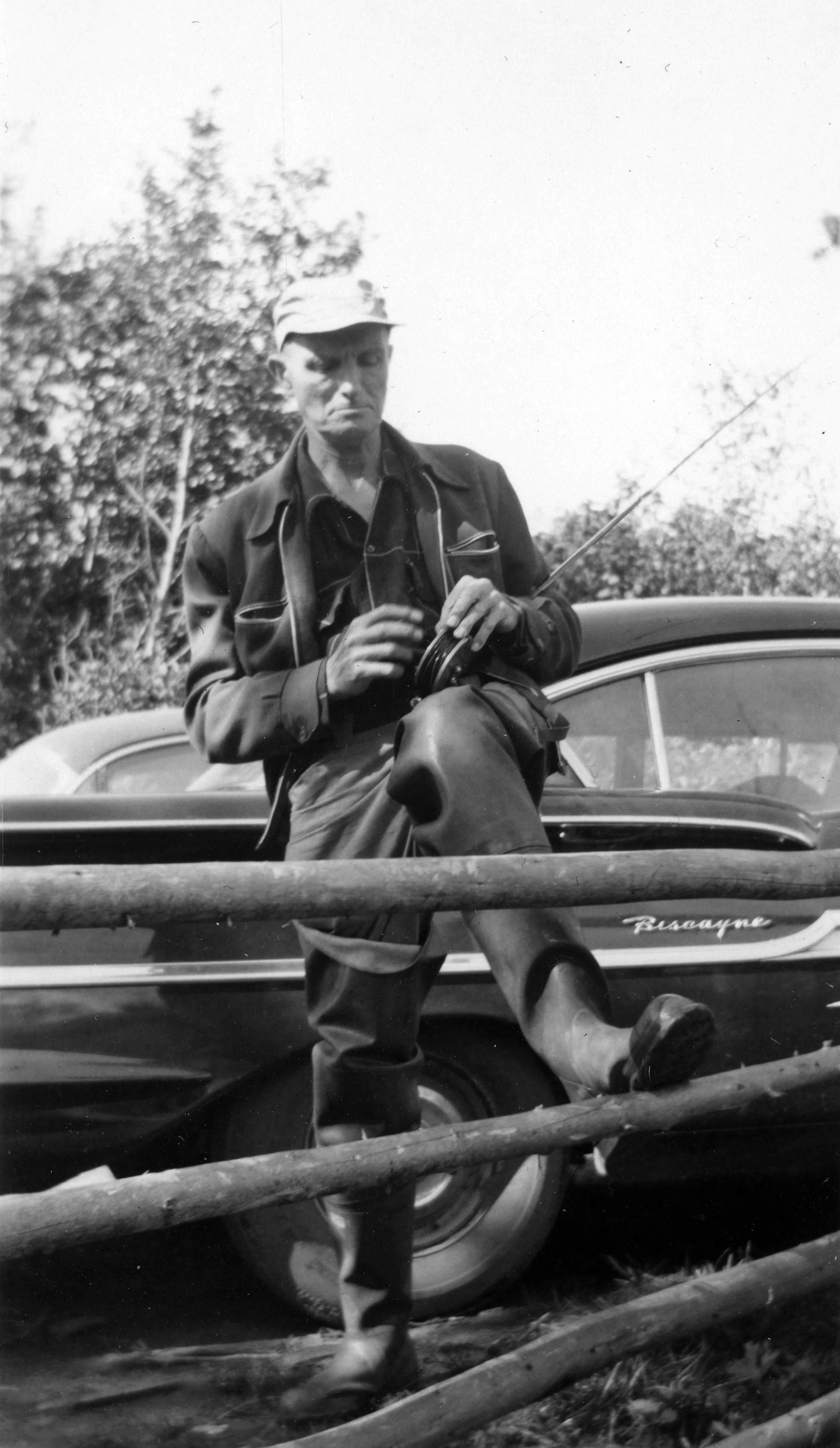
archival photos by James Hudson, courtesy of his granddaughter Marsha Tulk
Casting upstream
Marsha Tulk takes us where the salmon strike pink.
Marsha with salmon at Cole Brook
I think often about how few people I see fly fishing these days, in places where salmon rivers once shaped summer memories and family traditions. It’s a real shame that so many women feel intimidated to be on the river. But the bigger loss is that fewer people in general are passing on the skills, the stories, and the stewardship that come with fly fishing in our province.
I only started fly fishing about four years ago, and I am far from an expert. Most days, when a fish tugs the line, it feels like a happy accident more than anything I did right. But each cast teaches me something—about patience, perseverance, and my place in the world.
At first, I felt out of place in big, awkward waders and boots, surrounded by seasoned anglers—almost all men—who seemed to be born with a fly rod in hand. But the river has its own way of levelling everyone. It does not care how long you’ve been fishing, what you’re wearing, or how expensive your gear. Small note to the gear manufacturers: women’s bodies come in all shapes and sizes, but one thing is for sure, our feet are not that big even in the female version of the neoprene socks in a wader pant—oh, and we have hips. Bit of an awkward wiggle dance getting into and out of waders. But what really matters is how you show up—with respect, curiosity, and the patience and willingness to learn.
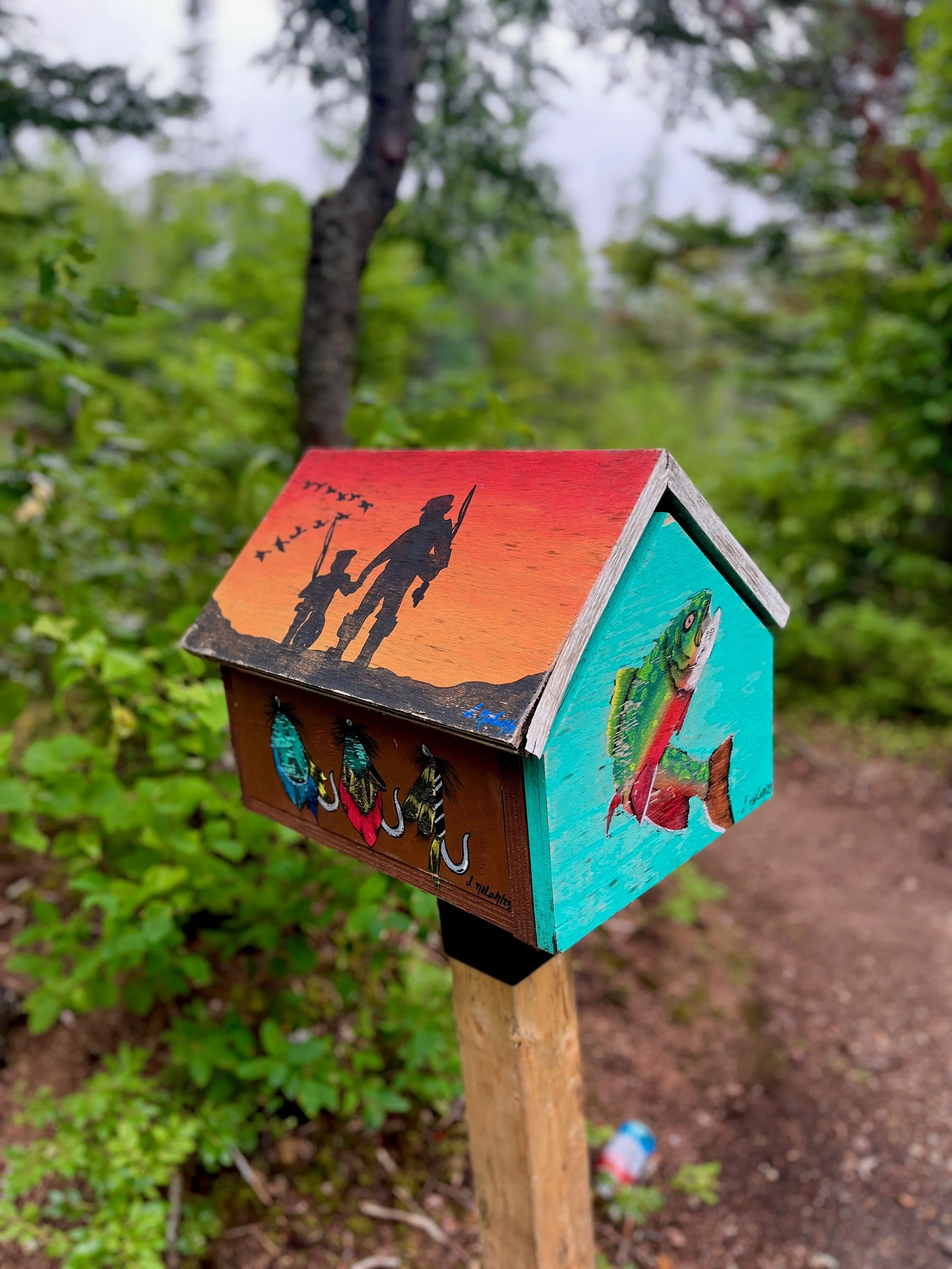
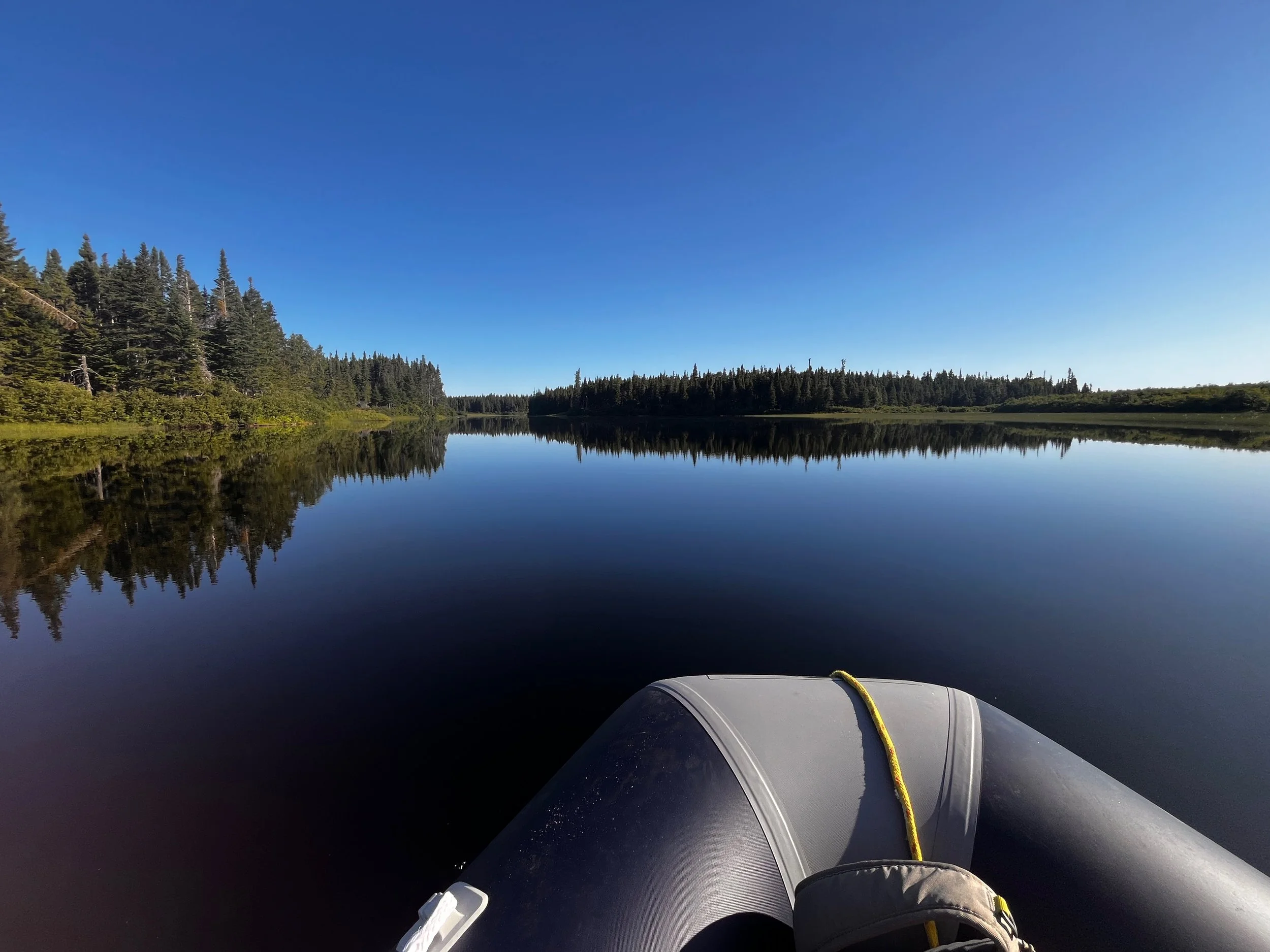
One cool breezy morning, out I walked into the water at six o’clock on a cool summer morning, wearing the only light coat I had at the time—a fuchsia puffy jacket pulled over my waders. I never thought I’d be the kind of person who owned a pink jacket, let alone wore it on a salmon river. And it is not the type of colour you see in fly fishing gear stores amongst the array of earthy tans, greens or plaids. I bought it online on a whim. But there I was, standing knee-deep in the rush of water, line in hand, learning how to cast with more hope than skill. If salmon had a sense of humour, I figured they were going to strike at my fly out of pure curiosity: What on earth is that bright pink thing doing in our pool?
Still, the learning curve is steep. I have hooked that pink coat a thousand times more than I have hooked actual fish. I have snapped hooks into trees, whipped my fly into the water or rocks behind me so often that the finish wore off, and landed them with a noisy splat that sends salmon fleeing. But every mistake has taught me something. Each tangle is part of the learning curve. And the few moments when everything aligns—the line rolls out smoothly, the fly lands just so, and a salmon strikes—those are the moments that keep me coming back. That tug on the line? Pure exhilaration.
Fly fishing is not about catching fish. It’s about learning how to pay attention—to the pools, the choice of flies, the way the line lands, the presentation of the fly. It’s about showing up. And for me, it’s also about showing up in a space where women are still rare. When I walk onto a river with my husband, I’m often the only woman there. But I’m not trying to blend in. I wear my pink coat overconfidently. Not because it’s fashionable—it’s not, and my husband kindly reminds me every time I put it on—but because it encourages me to take up space. To claim this experience for myself. Plus, at this point, I think it’s a little lucky.
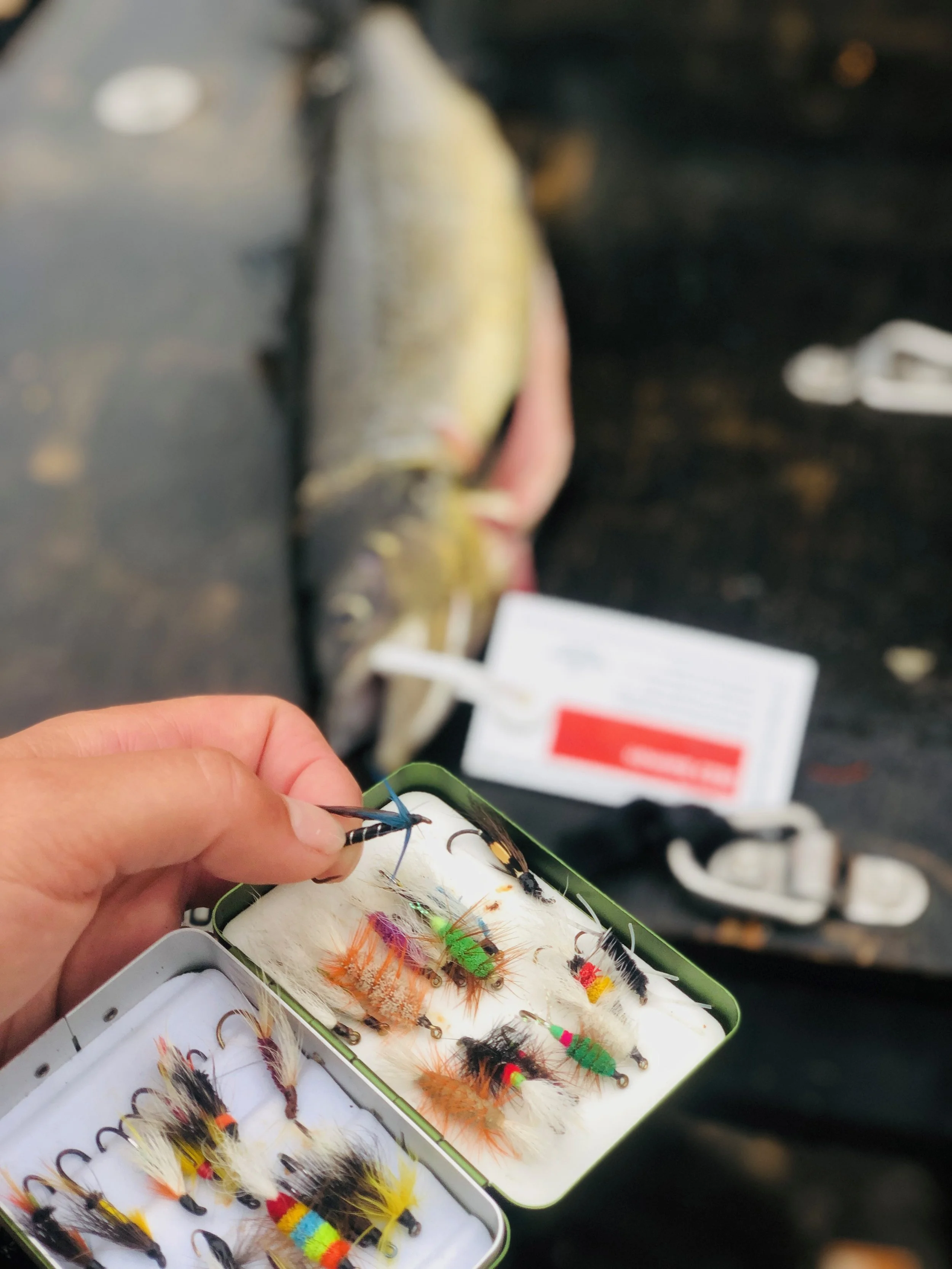
Fly fishing has taught me patience and humility. It has made me more attentive to my surroundings. It has also connected me more deeply to nature and reminded me how fragile these ecosystems are. The Atlantic salmon faces a gauntlet of threats: warming oceans, open-net pen farming, microplastics, overfishing. Standing in a river with a fly rod in hand, you can’t help but feel the urgency to protect what is left. This feeling of protectionism is even more prevalent with the many occurrences of wild fires across our province this year.
To paraphrase David Suzuki, humans are the only species that live in the moment yet also think of the past and imagine the future. I think of the grandfather and great uncle I never fished with. They were the best of friends and fished on the same rivers I now fish on. I think of the younger generation who might one day put on their own fishing jackets—whatever colour they are—walk into a river and feel the thrill of that first strike. What I wouldn’t give to rewind time and fish just once with Jim and Stan. I imagine the quiet between us, the rhythm of the cast, the shared reverence for the water. They never got the chance to pass on their knowledge of fly fishing to me, but I learned a lot of it through my father, who learned from them. Maybe I’m learning in their honour.
And maybe—just maybe—someone, young or old, will see my bright fuchsia jacket and take that first step out into the water with me.
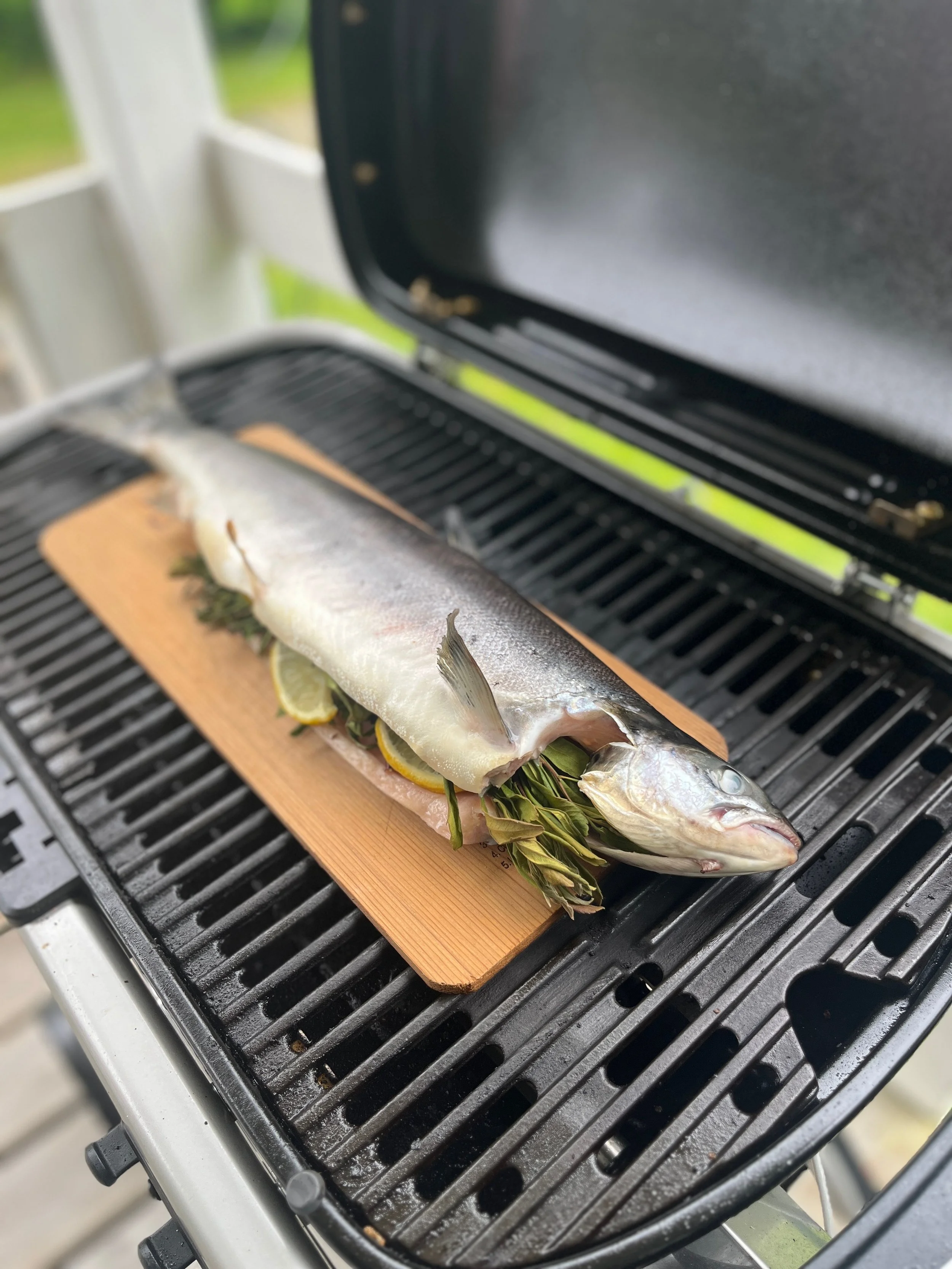
Whole Stuffed BBQ Wild Salmon
1 whole wild salmon, cleaned and descaled
I large bunch of Sweetgale foraged on river bed from where that beautiful salmon was hooked
1 lemon
Salt and pepper
Stuff the cavity of the salmon with the sweetgale and slices of lemon. Season with salt and pepper. BBQ on medium until internal temperature on the thickest part of the fish closest to the spine measures 165ºF. To serve, cut from the back and flip the top side of the salmon over exposing the spine, peel out the spine with the head and tail attached from the bottom fillet. Enjoy!
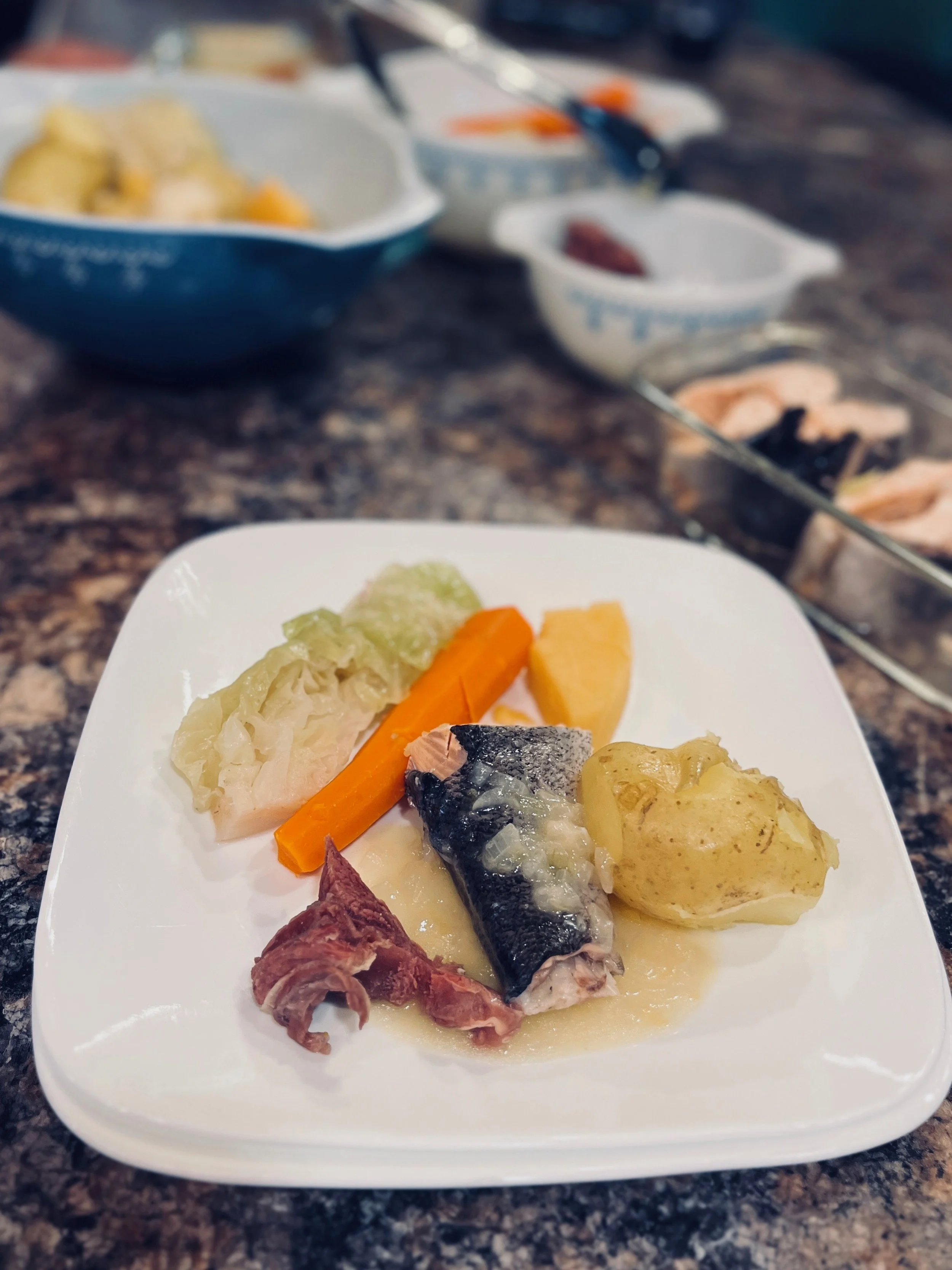
Traditional Boiled Salmon
This is the same as the traditional Newfoundland & Labrador boiled dinner or Jiggs dinner with salt meat and root vegetables but with salmon pieces steamed on top.
When the vegetables are almost tender, add the wild salmon that has been cut into 3” steak pieces on top of the vegetables and cover. Cook until the fish is steamed to perfection. Drain the pot and place all vegetables and fish in whatever serving dishes you have. A simple lemon butter sauce is fantastic to accompany your meal.
Marsha Tulk is a photographer, recipe developer and award-winning author of Food Culture Place.
foodcultureplace.ca | @foodofgenerations
This piece can be found in Edible Newfoundland and Labrador, Fall 2025
Thank you for reading! As a special spring treat we are releasing this story digitally. If you would like more early access to our stories in digital format we encourage you to consider becoming a member. Learn more about our membership plans click the button below.