
words by Sara Snow / photos by Dave Snow
When we fish together
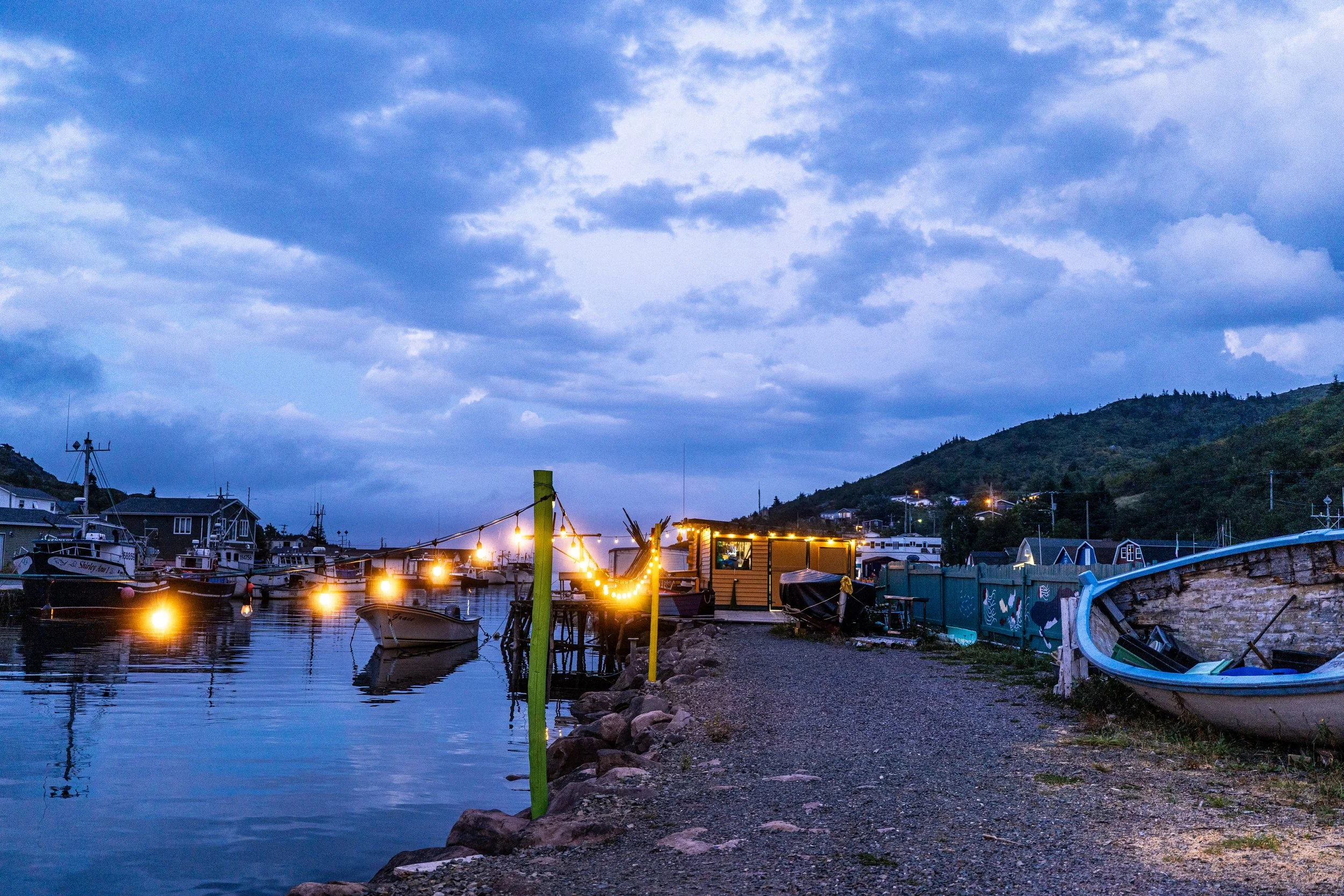
Café view at Arch & Po
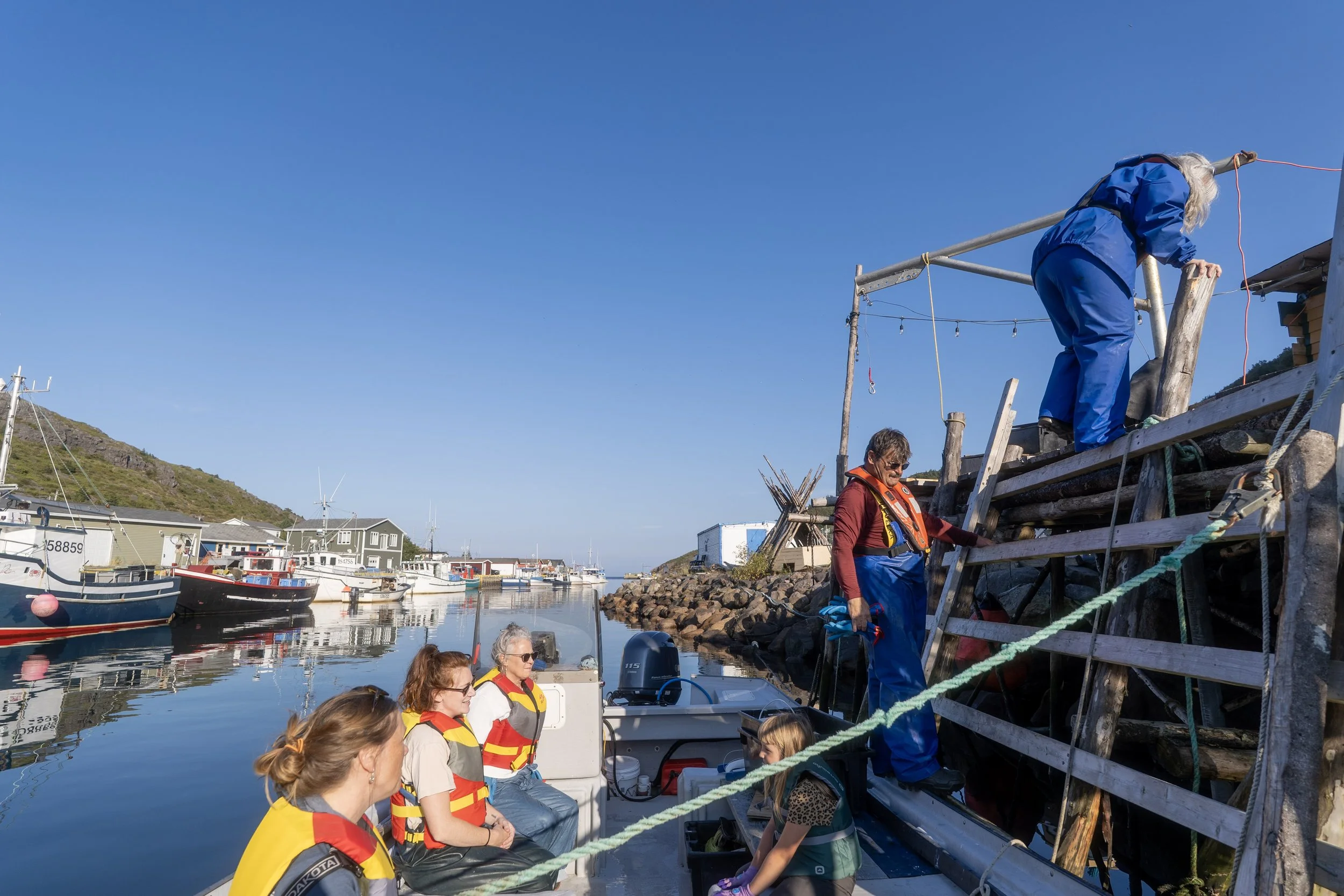
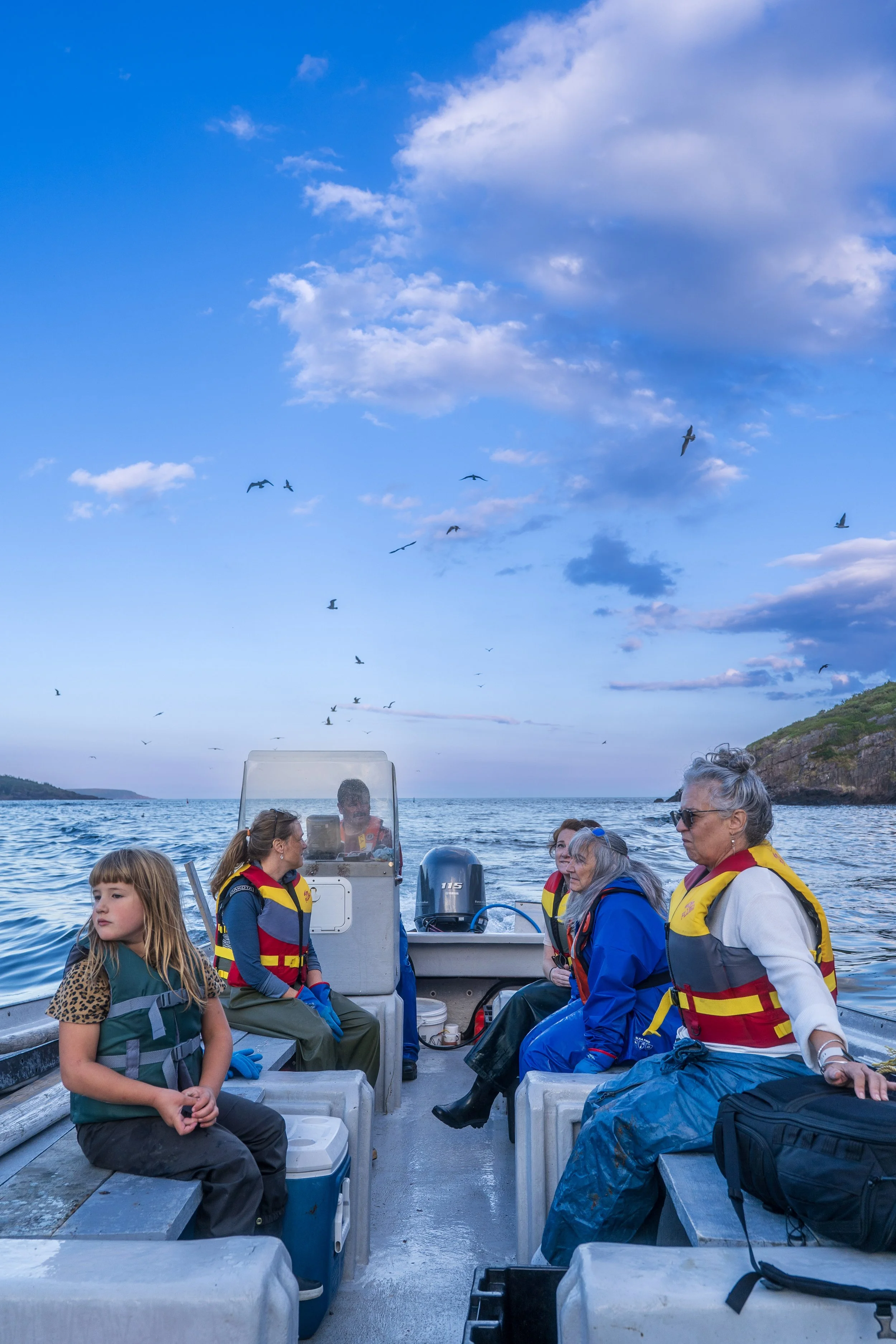
Vera heads to the back of the shed to put on her waders. Her mom says goodbye and scoops up her littlest brother, her other brother following along as they head back to the car. Vera is going fishing. She’s eight years old and she’s had more time on the water, fishing for cod, than many. She grabs her gloves and heads out onto the wharf to look down at the boat below. I follow her lead, as she climbs down and hops aboard. We’re joined by several other women, all participating in Girls Who Fish, a program to get girls and women out on the water as fish harvesters. Girls Who Fish is one of several Fishing for Success programs at Island Rooms of Petty Harbour, on the eastern coast of the island of Newfoundland.
Going fishing
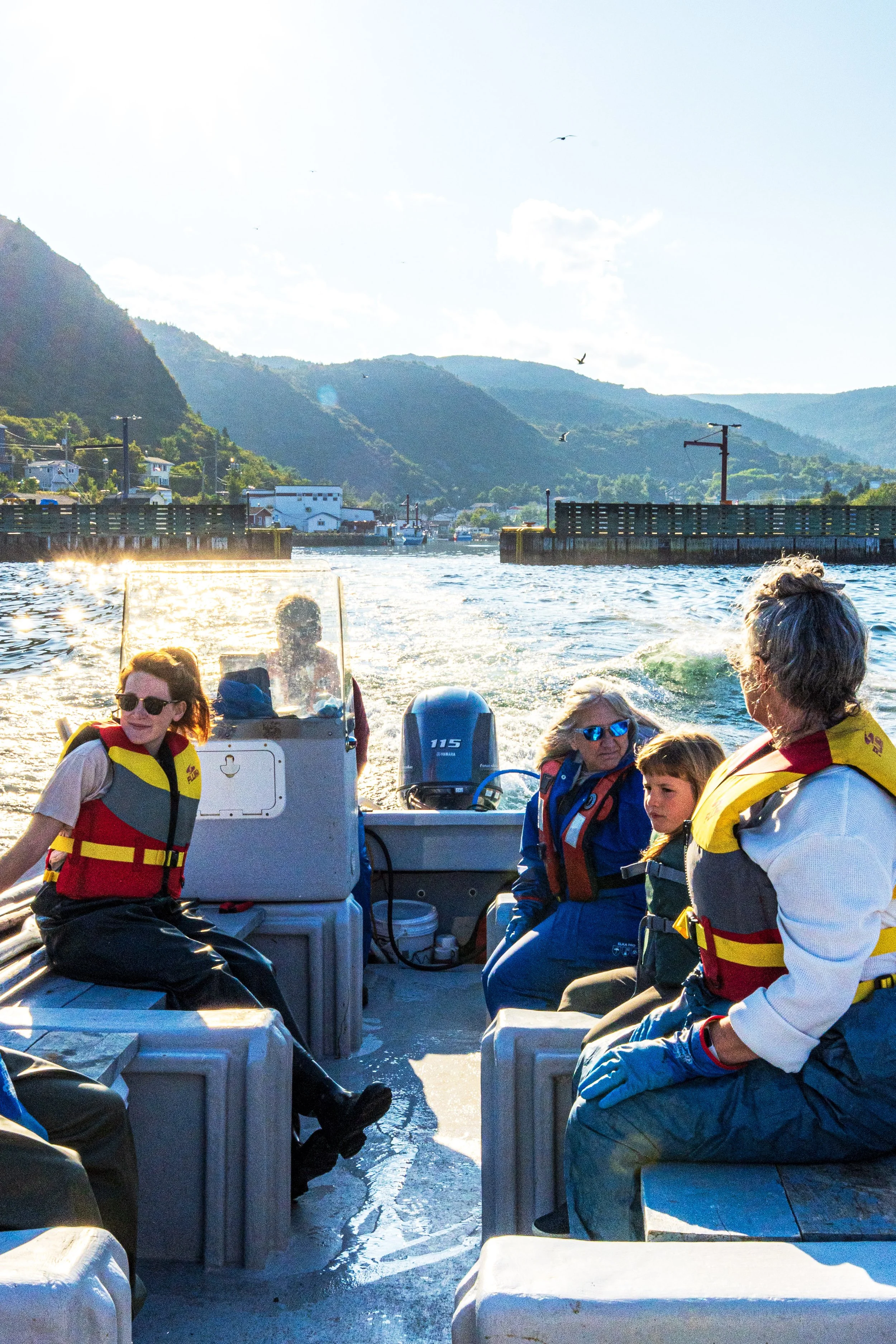
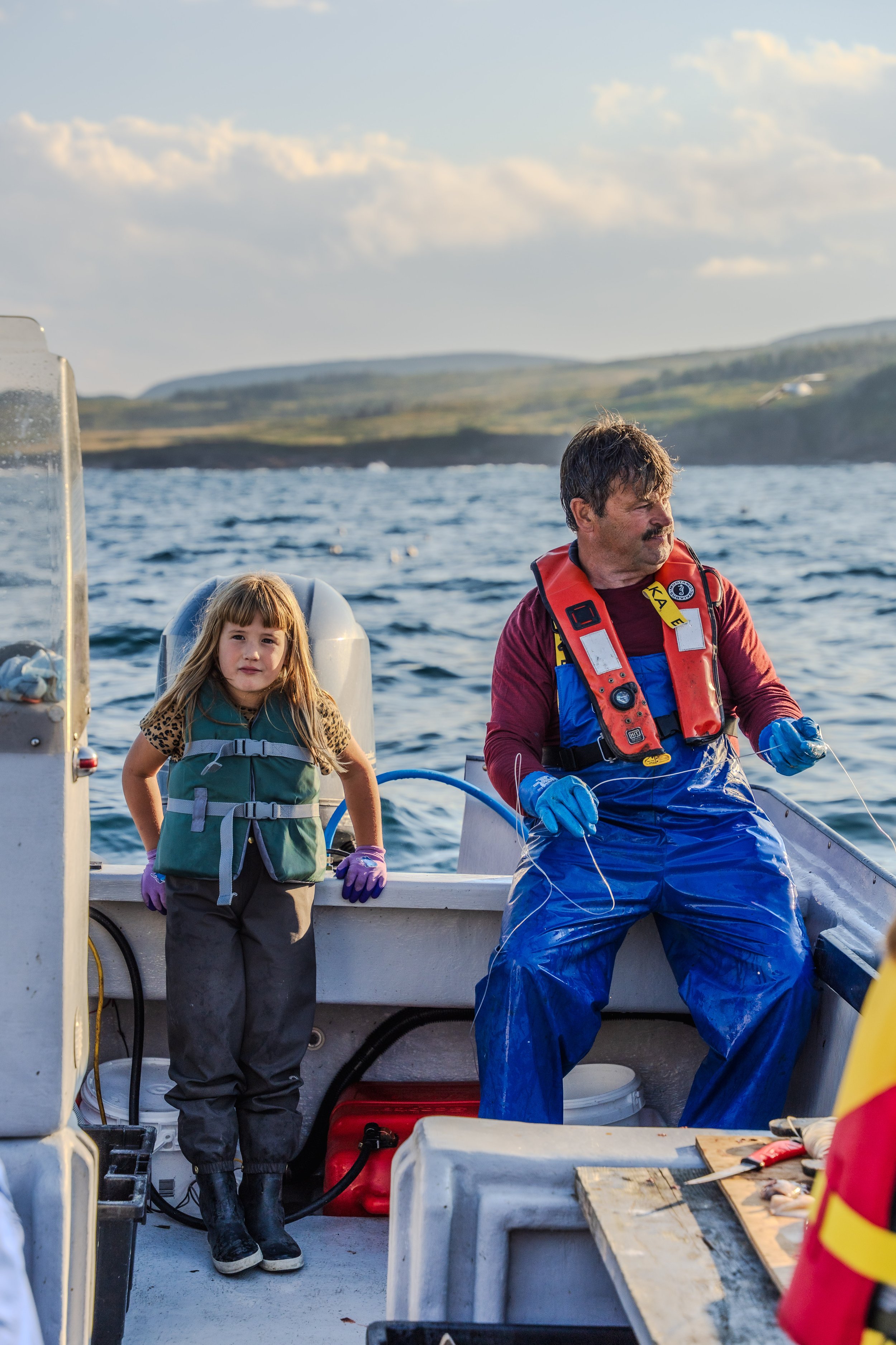
Vera settles in on one of the benches that also serve as storage while her friend, Kerri Oakey, finds a spot, and Kelly Bruton, artist-in-residence at Fishing For Success, climbs aboard. Kimberly Orren, co-founder of Fishing for Success, grabs the mooring line, climbs aboard, and gives a nod to her co-founder and husband, Leo Hearn. Leo, a renowned local traditional fish harvester, scans the harbour before steering the boat from the dock, past fishing boats, fish harvesters packing up for the day, the Petty Harbour Fishermen’s Co-operative fish processing plant, and houses of every colour that outline the harbour.
Conversation is light and lively, shifting from sea creatures to the number of moose Kerri has seen in the past week (five!). The engine revs and Leo turns to look over his shoulder, navigating by sight and by a deep knowledge of the landscape.
“He’s looking at the headlands,” Kimberly explains as she points to the hills behind us, “and triangulating with a spot on the ocean, with the headlands and places in the community. It could be houses or telephone poles.” Everyone turns from the horizon, each of us trying to triangulate, to imagine ourselves marking a place on the open water by the geography we’re moving away from.
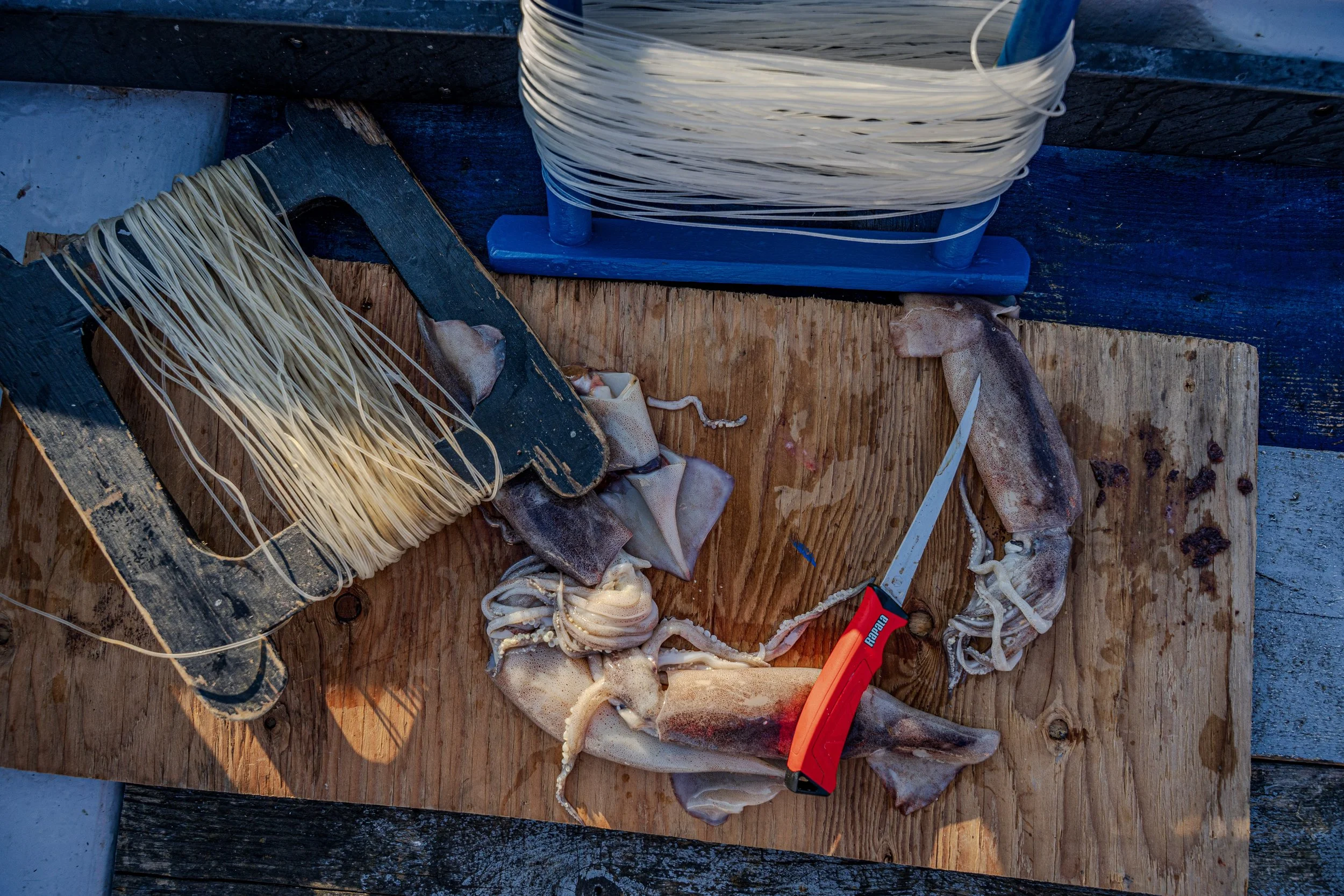
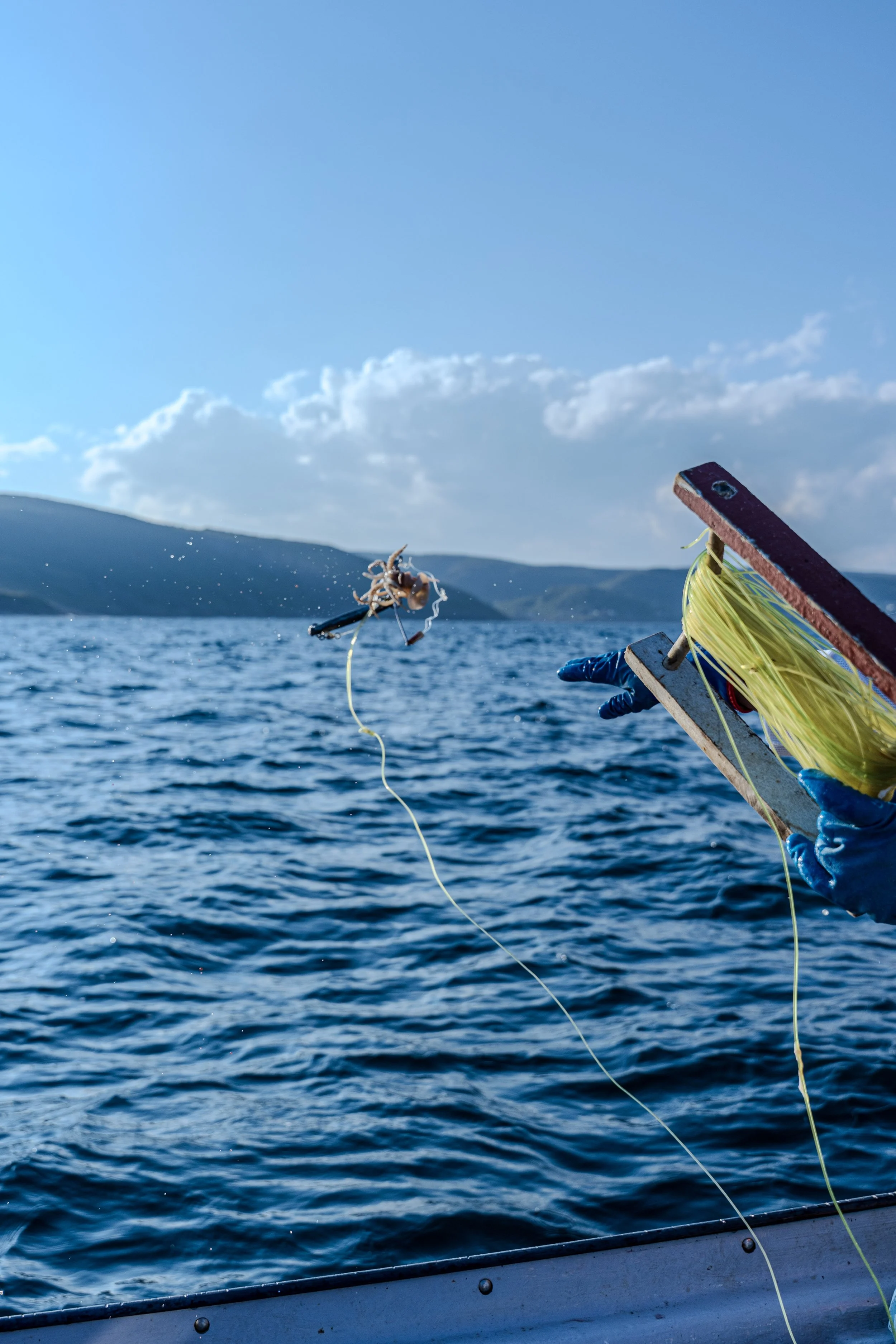
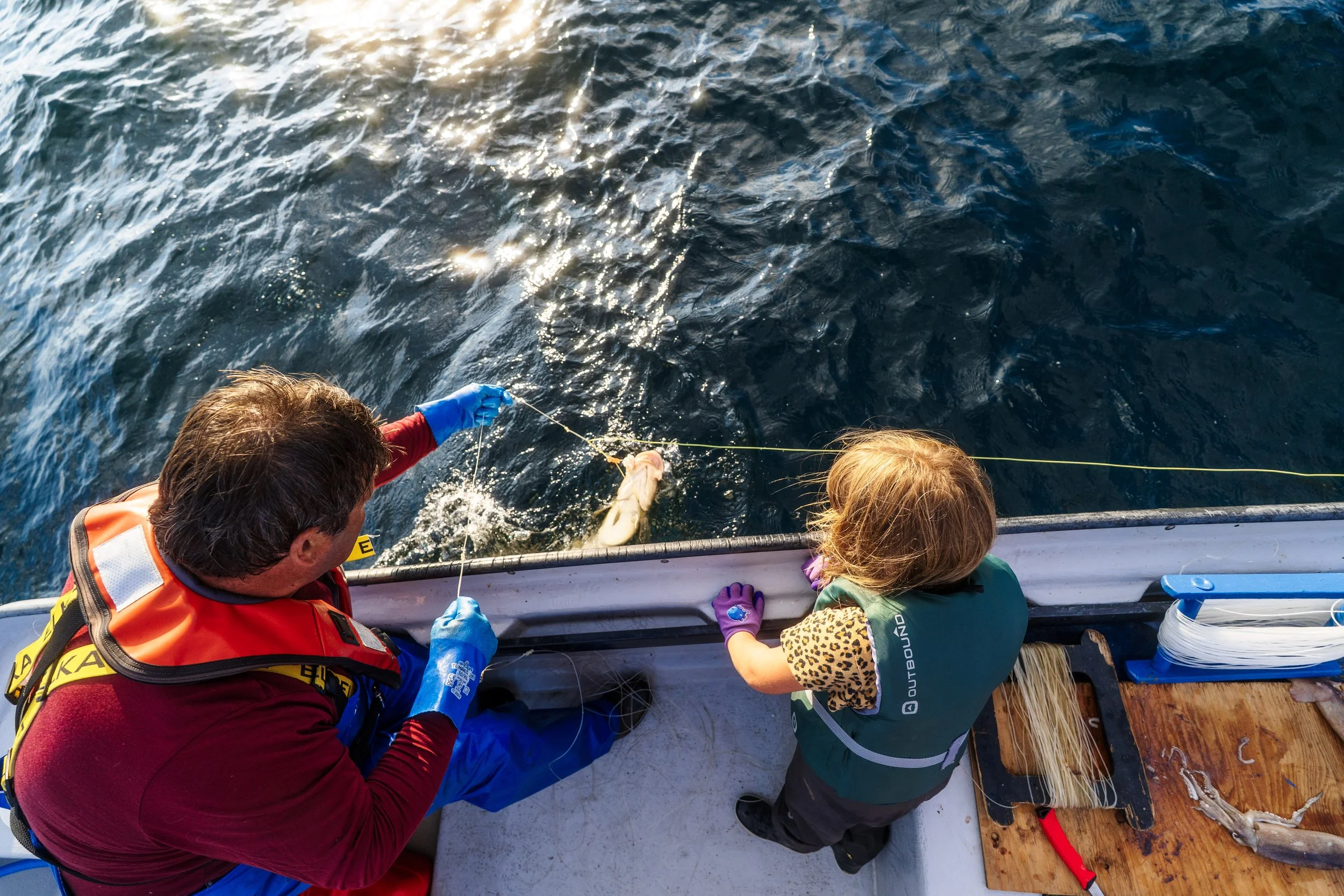
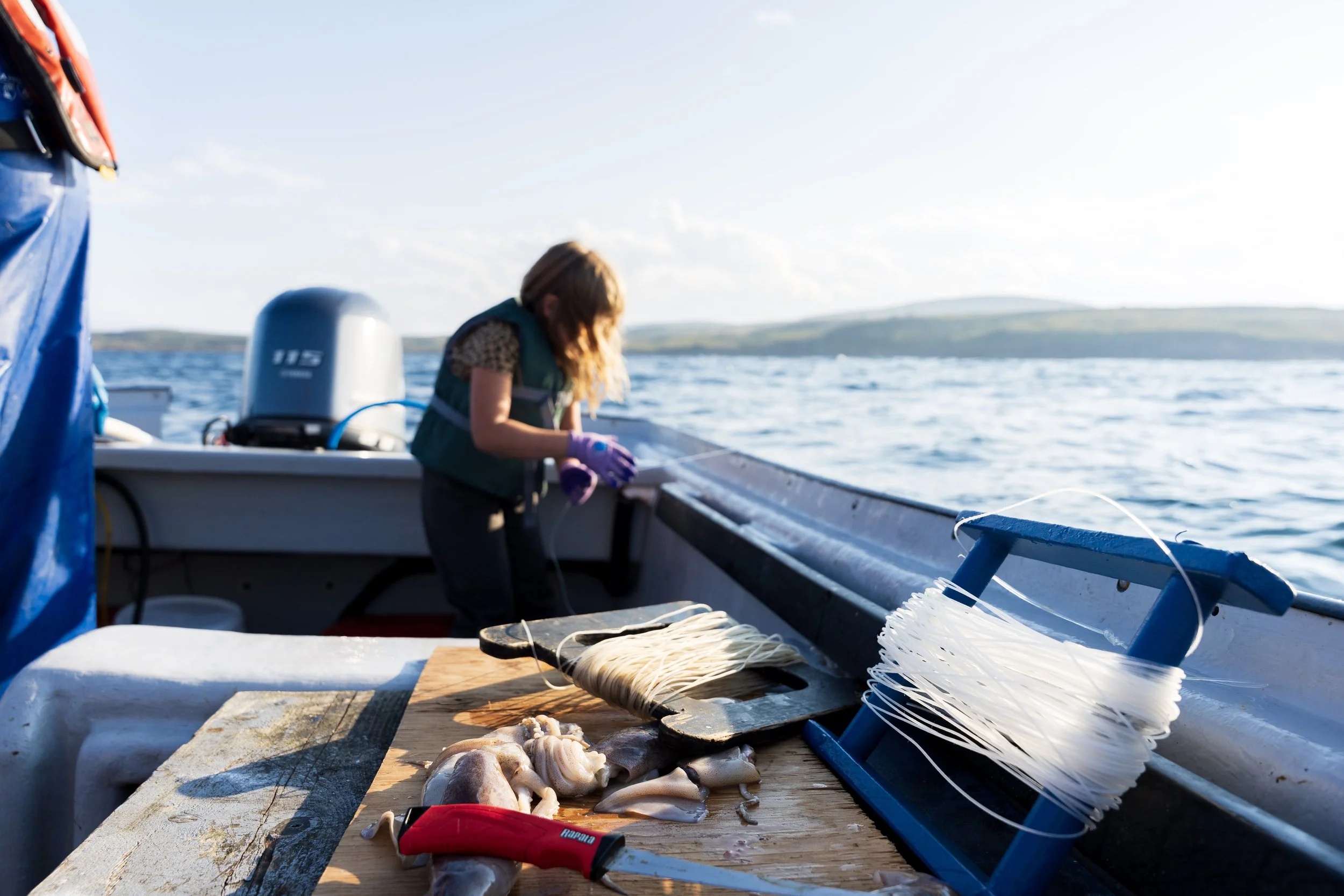
Petty Harbour shrinks in the distance and Leo finds the spot he’s looking for. The engine quiets and the seagulls find us, chattering above as everyone sets to work, pulling out reels of line, positioning bins for fish, hooking bait on weighted lines and finding space along the gunnels. Petty Harbour-Maddox Cove is a protected hand-line fishery—a protection that dates back to the 1800s—where fish harvesters use hand-lines, protected from trawls and other types of fishing.
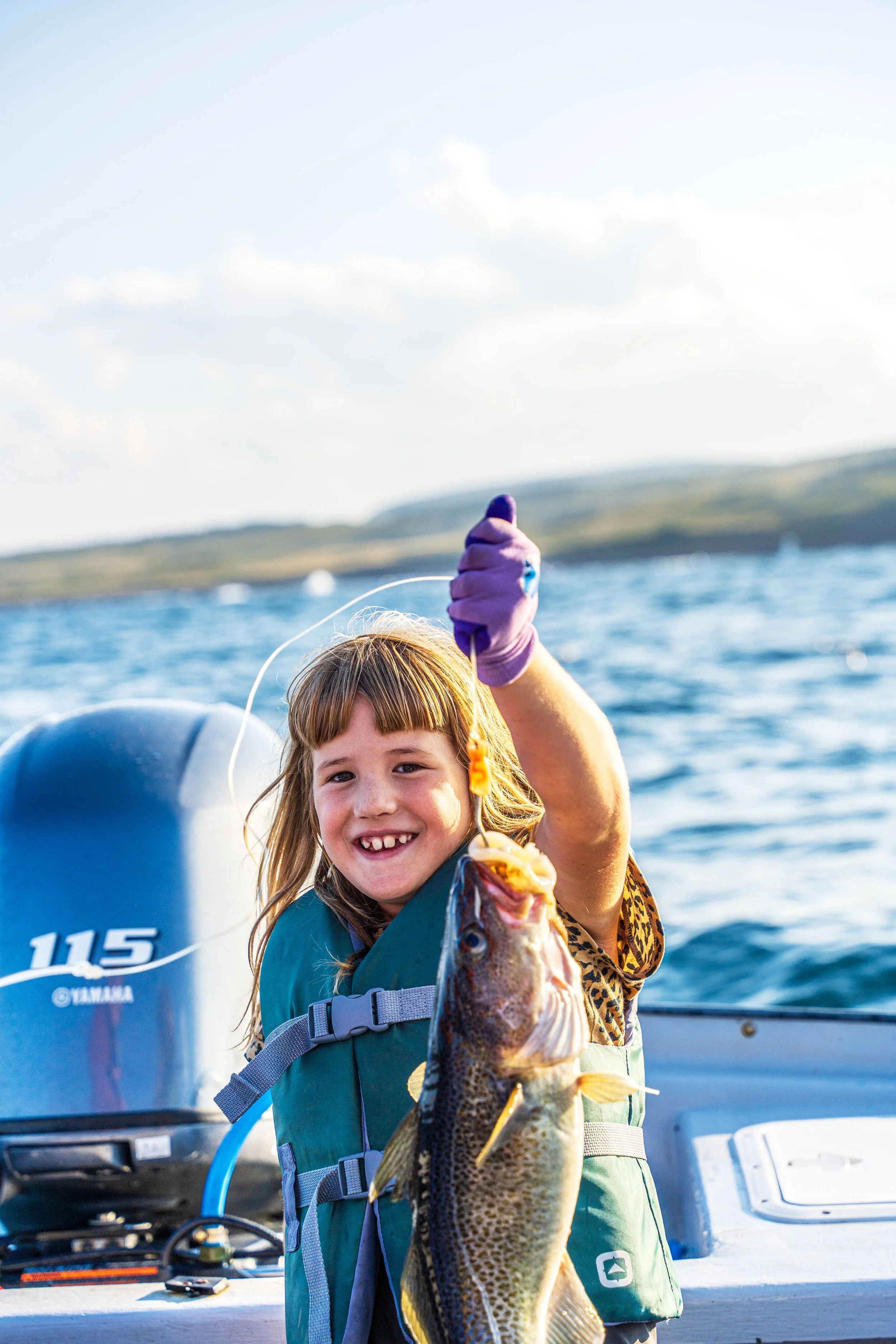
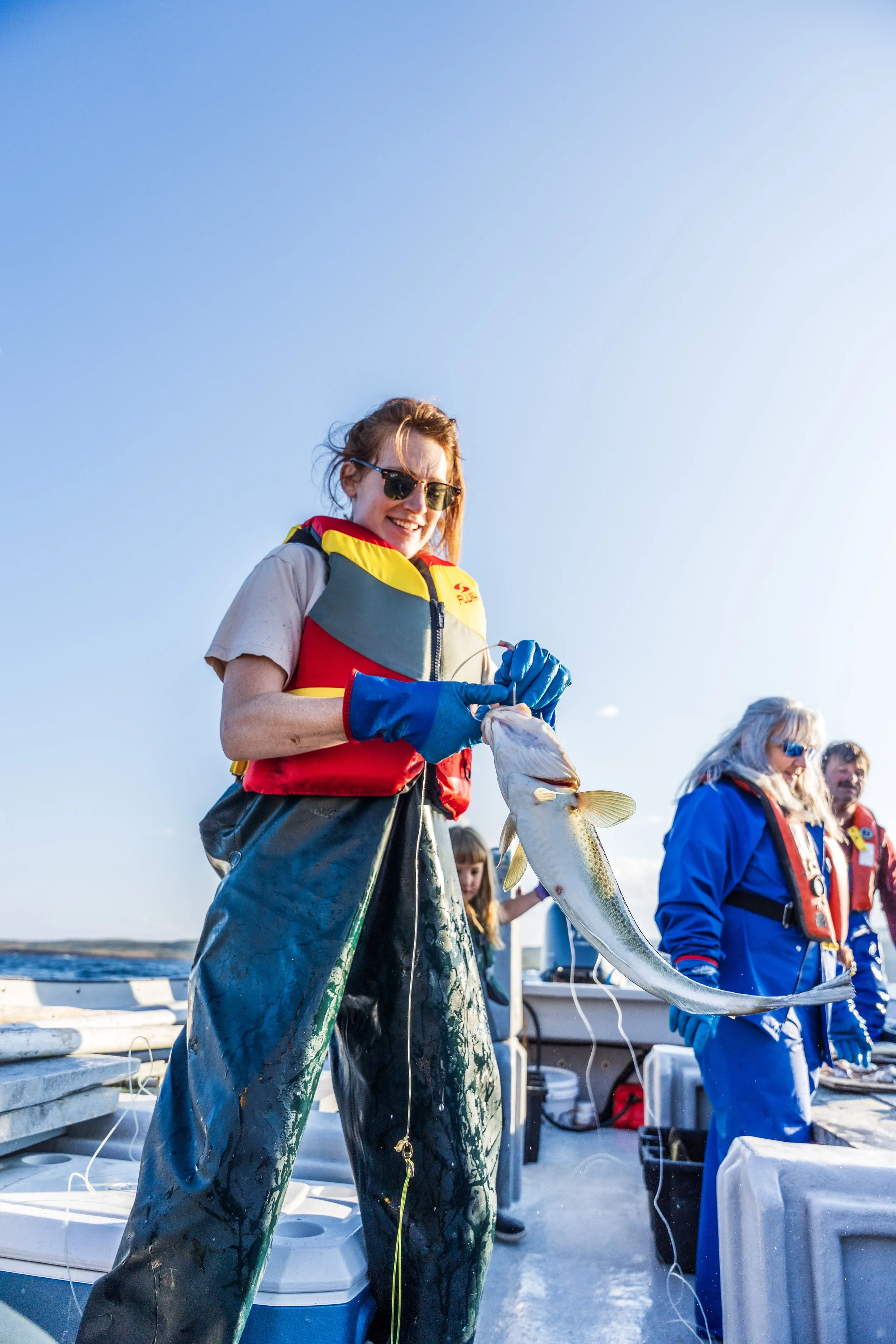
Within minutes of letting out her line, Vera is pulling it back in. She’s caught the first cod of the day. She smiles wide as everyone cheers.
“The first catch is usually very quick, or we throw the captain overboard,” Kimberly jokes.
“Let the line down, just let it freefall,” she says to Kerri.
Kerri has two children and another on the way. She and Vera’s mom both homeschool their children. The “classroom” can range from the kitchen table to a cross-country ski trail, a fishing boat to the forest. “My oldest is turning four so school is pretty light,” she says with a smile, “today was half an hour. But we’ll go snowshoeing or cross-country skiing, or we’ll have meet-ups, and tomorrow is swimming.” Kerri has lived in Petty Harbour since 2014. Originally from Nova Scotia, she studied at MUN and decided to stay. “I love Newfoundland,” she says, pulling in her line, hand over hand, with anticipation.
I watch and take mental notes, every single moment filled with a thousand lessons for someone who has never caught a cod. Kelly hands me a reel, time to get to work.
“You’re going to want to be here when you’re holding the line,” she tells me as I anchor my feet to the floor and set my hopes high. “Hold the weight,” she continues, “and then let it go of its own accord.” Kelly is an interdisciplinary artist, whose work spans set design to textile art. As artist-in-residence with Fishing for Success, she is working on a plant dye and cod skin fish leather project, creating fish skin textile in stunning hues of reds, purples and copper.
“Run the line through your hands,” she says. “Give it a tug.” I pull the line in, hand over hand, finding my bait untouched. I try again.
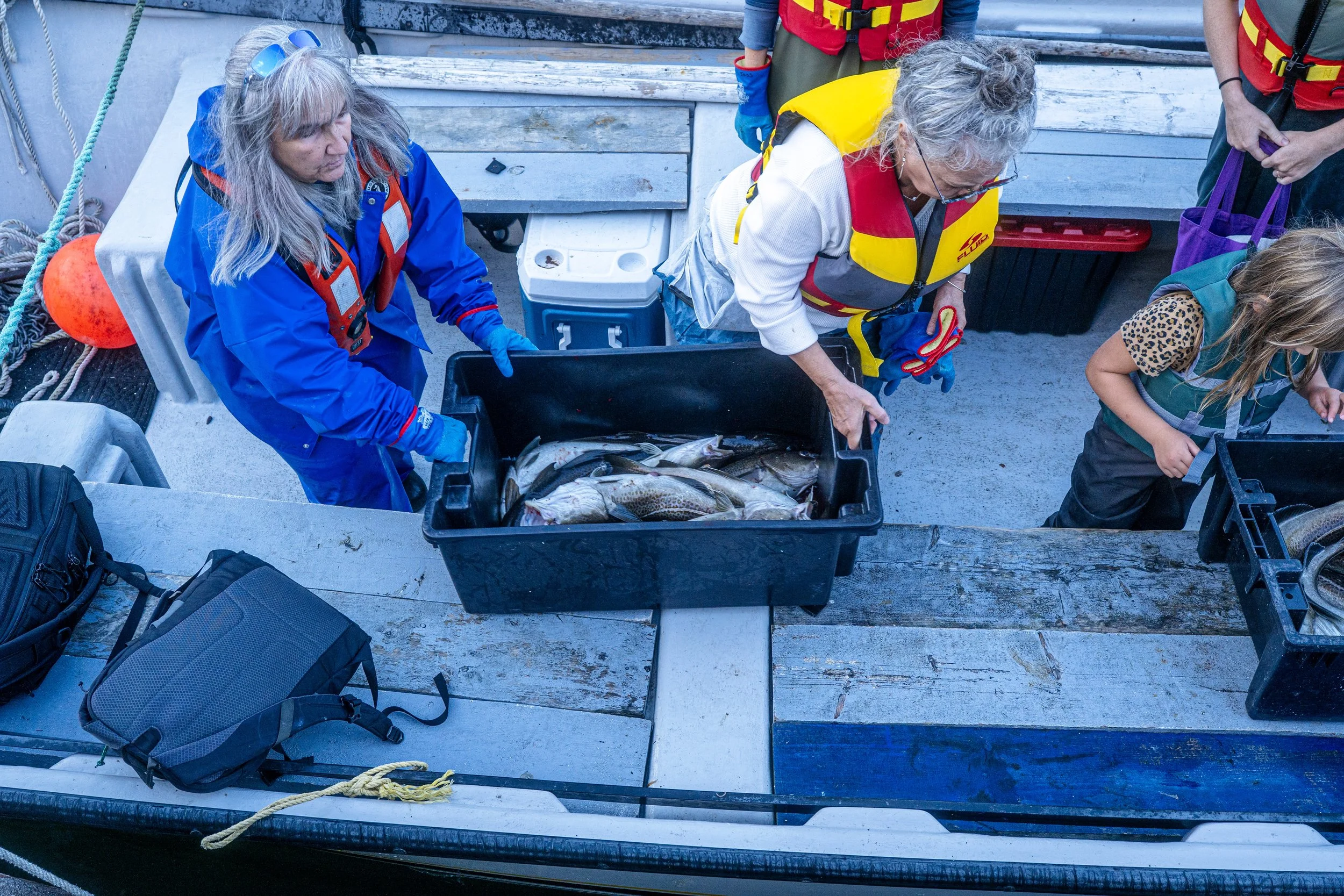
Next to me, Kerri braces against the side of the boat. She’s caught one. Whoops of joy join the seagull chatter above—every fish caught is celebrated while the women work. Kerri pulls the hook from the fish’s mouth and breaks its gills. She tosses the still-baited hook back in the water and places the fish in the bin.
“Try to keep your line out of the fish box,” Kimberly offers, and “try not to get your weight in with the line because that will cause it to tangle.”
“Let’s check our bait,” Kelly says to me. I check my bait, drop my line in again, and let it slip through my hands.
At the stern of the boat Leo is helping Vera pull in another. This one is a big one. Vera beams and so does Leo.
Making place
Vera and her mom joined Girls Who Fish when Vera was four. Her brothers also participate in Fishing for Success programs. Kimberly and Leo launched Fishing for Success in 2014 as a non-profit program geared to giving young people the opportunity to fish. Once established, Kimberly recognized a need for girls and women to see more girls and women out on the water, fishing, so she launched Girls Who Fish. It is one of several Fishing for Success programs, including Sea2School, WiSH (Women Sharing Heritage) for new Canadians, and Youth Cod Fishery, that aim to connect people with community, food and place.
Kimberly had been a high school science teacher when she decided to go back to school to study fisheries and aquatic science at the University of Florida. As a competitive sailor and diver, she had her captain’s ticket but was particularly interested in empowering young people with fishing skills. “I went back to school with the idea that I wanted to start a learn to fish program.” She finished her PhD and returned to Newfoundland, where she had spent her childhood and had first fished with her father. She recertified at the Fisheries and Marine Institute of Memorial University with her captain’s ticket and a Fishing Masters IV.
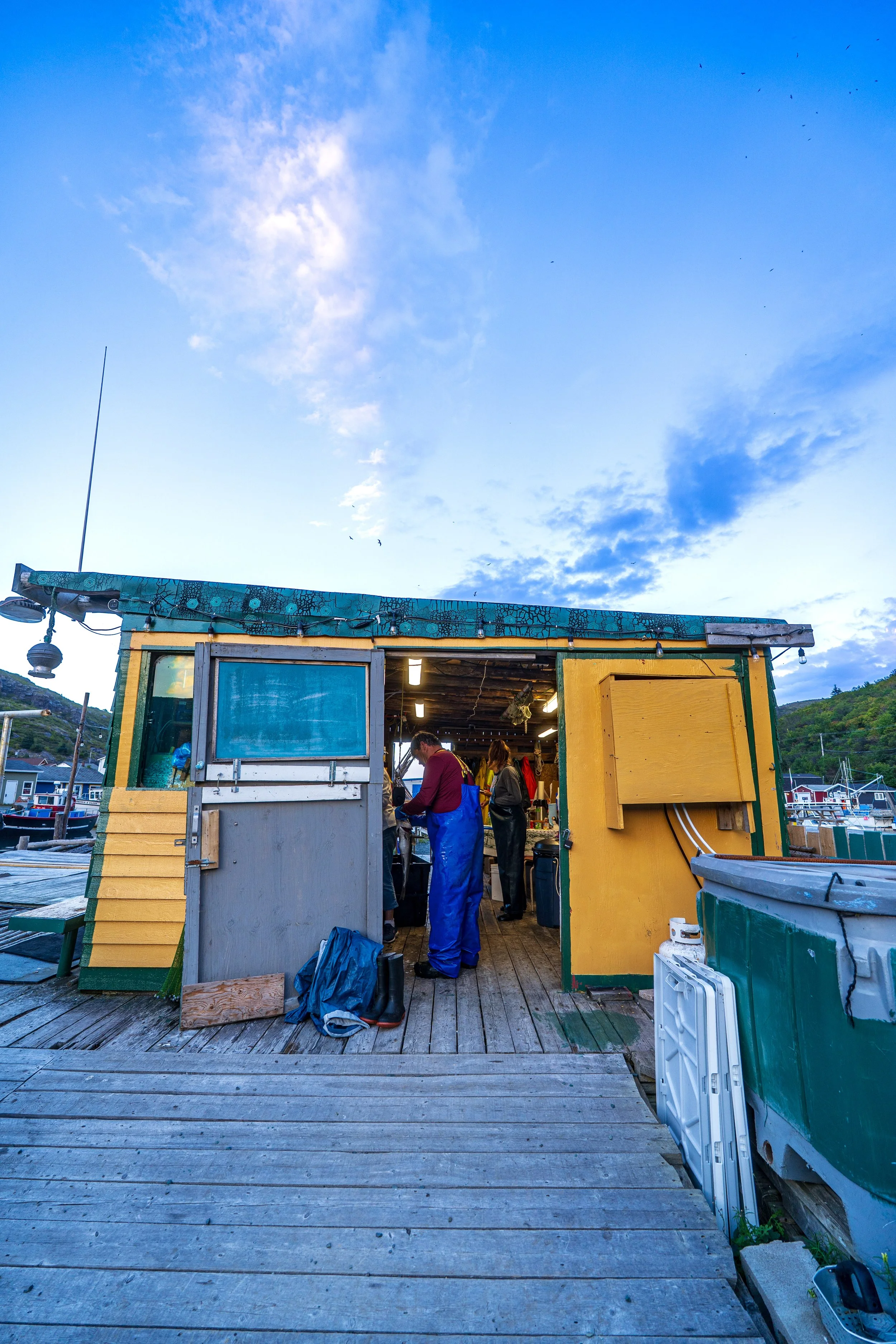
“I wanted to participate in the food fishery myself here in Petty Harbour,” she says, “and people were saying you have to go fishing with Leo Hearn, ‘he’s the best’.” She went fishing with Leo and hasn’t stopped, their hearts clearly together here in this place. They married one evening on a boat in the harbour, coming back to celebrate here on the wharf that is known as Island Rooms, now an award-winning museum established by Kimberly and Leo, paying homage to Newfoundland’s traditional fishing rooms (or sheds) and providing the perfect base to engage people in fishing, dory building, net mending, filleting, conversation and more.
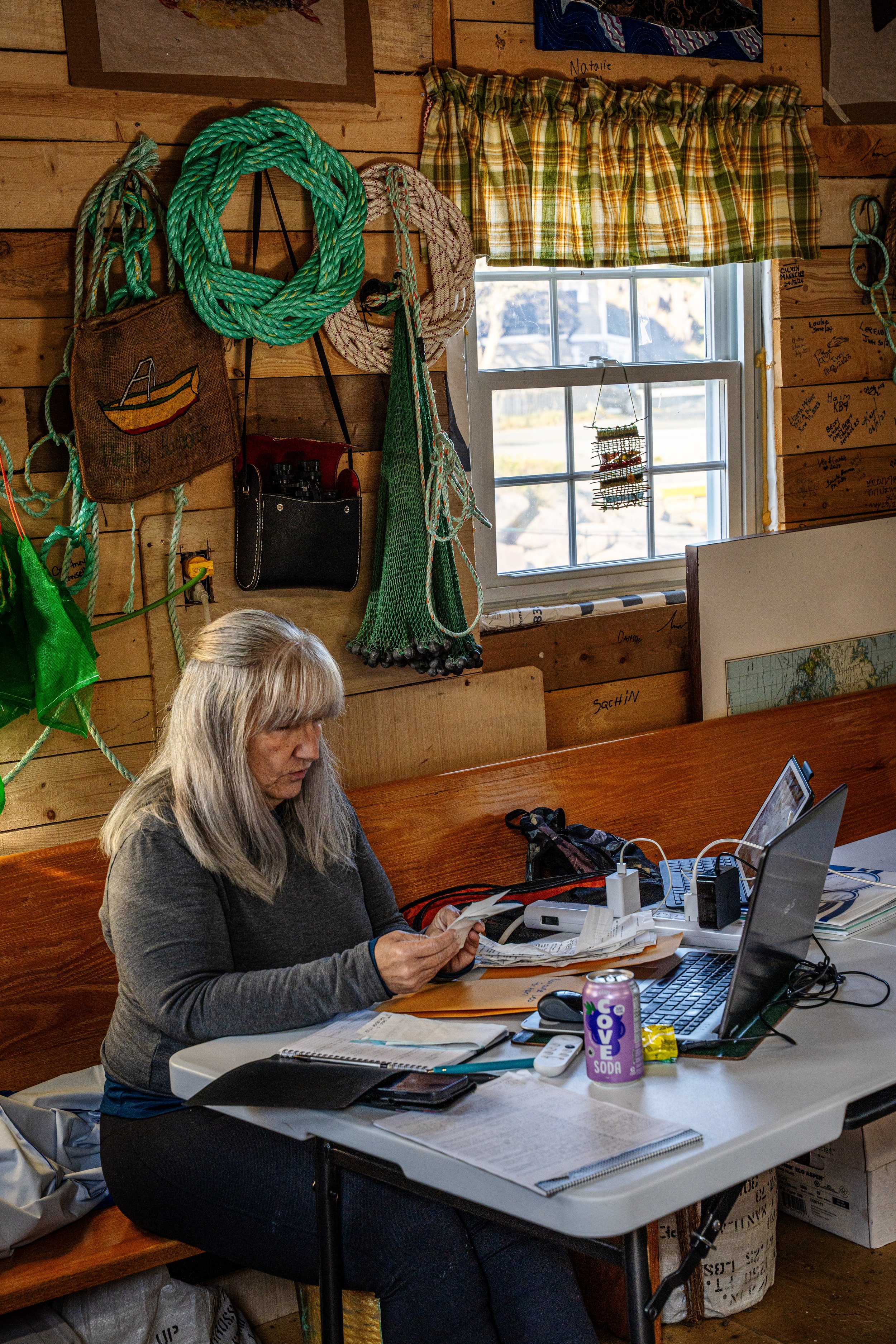
As Kimberly and Leo manage the fishing experience in different ways, their backgrounds and expertise work well together. “We have a constant battle of wills and battle of knowledge,” she says with a laugh, “because he has so much traditional knowledge and I have the more of a conventional, policy background.” Kimberly does a lot of paperwork. Running a non-profit social enterprise means partnering with other organizations to build and sustain programs. In addition to these programs, they operate in the tourism space providing unique experiences that, in turn, help sustain their non-profit educational programming.
“We have a Section 52 License that allows us to fish on certain days for non-profit and educational work. Our mission is to teach children and to pass on intangible cultural heritage so without that license we can’t do that,” she explains. Tourist experiences are limited to the food fishery days throughout the year. “It’s called the ‘recreational groundfish fishery,’” she adds, “but we’re not going to call it that because we don’t want children thinking it’s recreational. We call it a ‘food fishery’.”
Kimberly suggests this is the perfect location to teach a diversity of kids to fish. “With the proximity to St. John’s we can engage urbanized youth in fishing programs. Sometimes the most memorable experience you have with your parents is a fishing trip,” she adds. For a lot of people the opportunity to do that doesn’t exist anymore.” Fishing For Success partners with several schools, bringing student groups to participate.
“One of the biggest things,” she adds, “is that Petty Harbour has the protected fishing area where it’s a pure restricted handline-only fishery.” This protection ensures sustainable practice and Fishing For Success programs help engage young people in fishing so that they may grow up to work as fish harvesters or in fields and careers that support the practice, and in turn, their communities.
I give my line a little tug and it tugs back. I pull it in a little more and feel the weight of it. I focus and pull, hand over hand, trying not to rush it. As I see the fish break the surface of the water, my grin is as wide as Vera’s.
Feeding each other
“We caught so much fish!” Vera calls as everyone settles in for the ride back to the harbour. Reels are wound, fish are in their bins and the sun is setting.
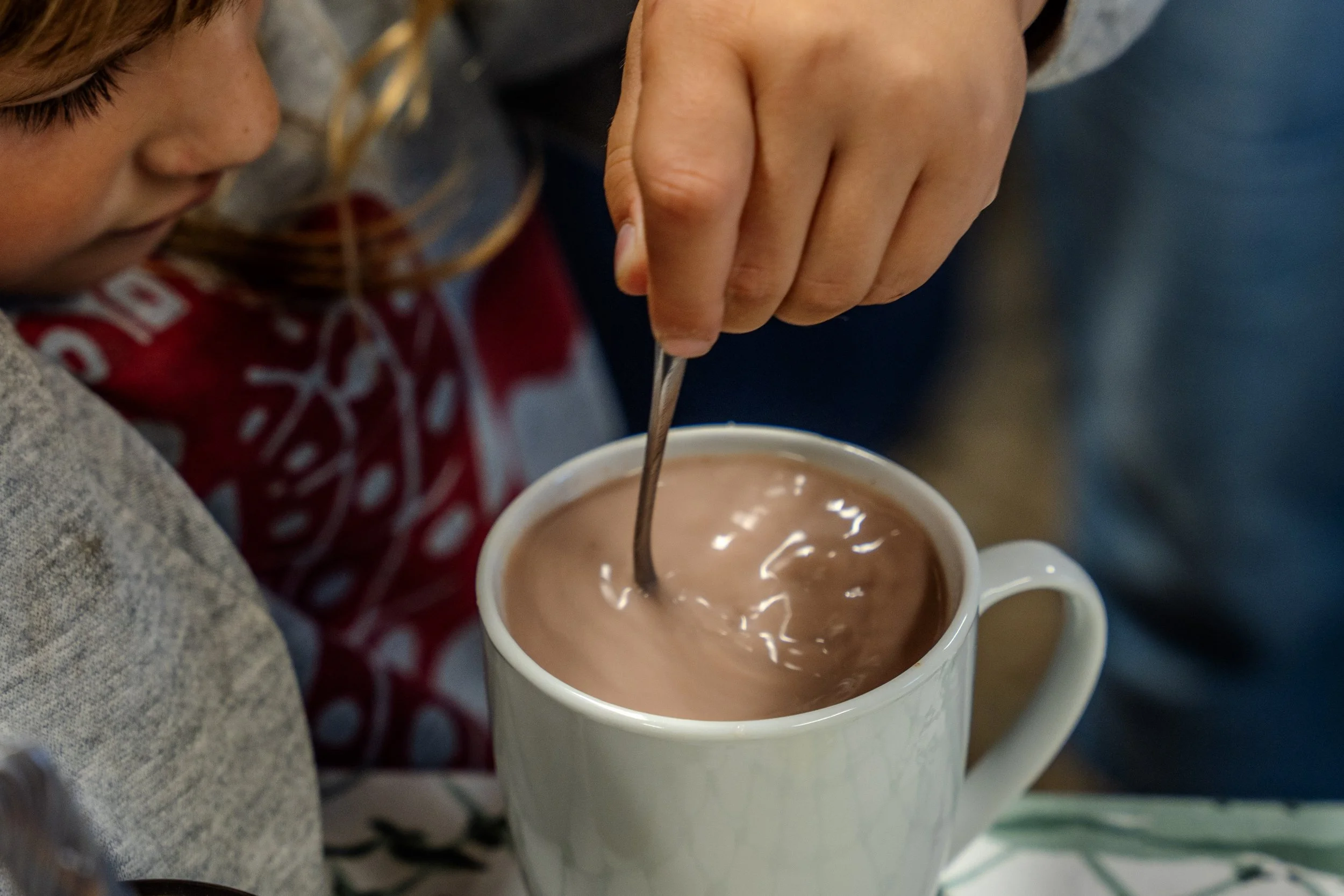
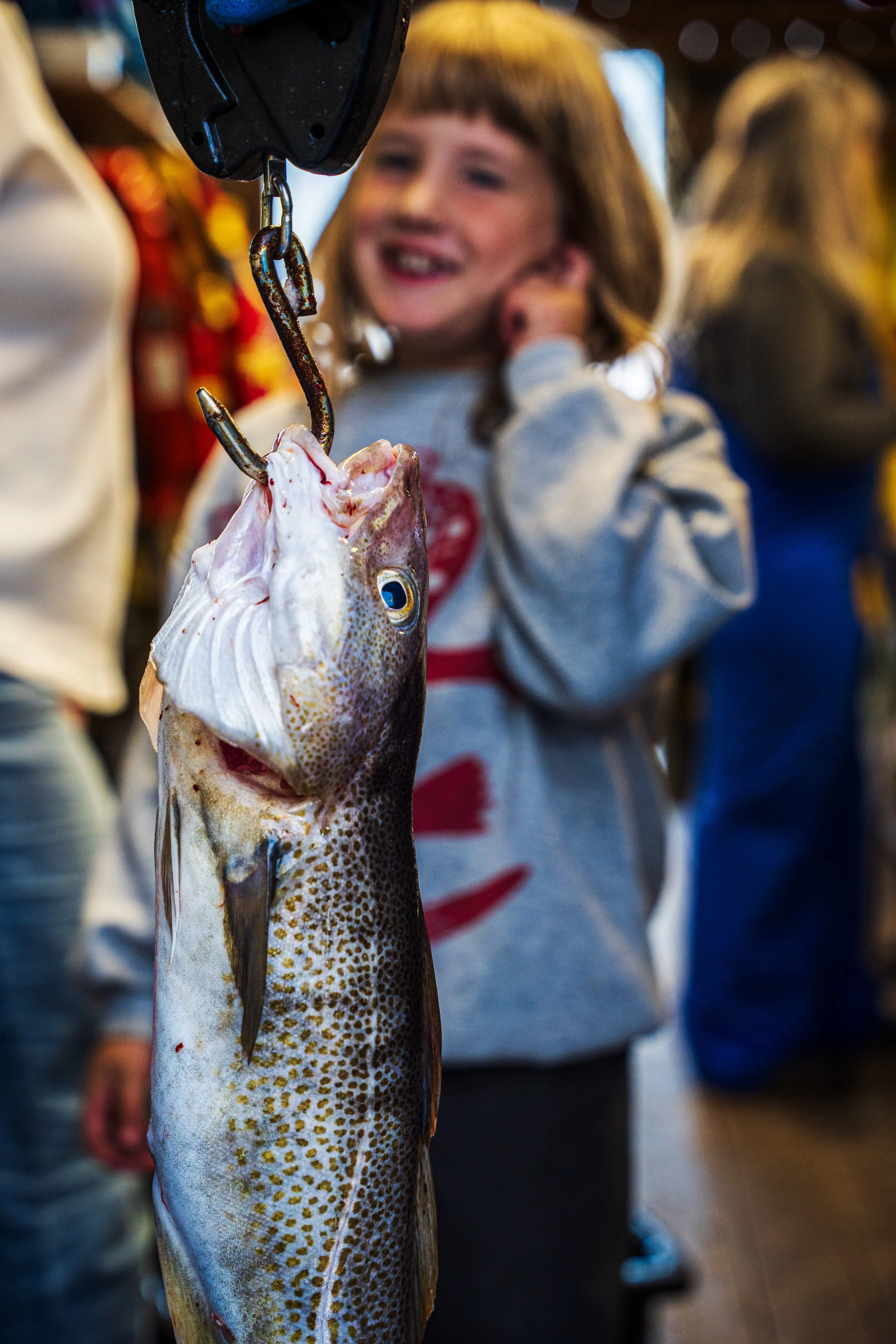
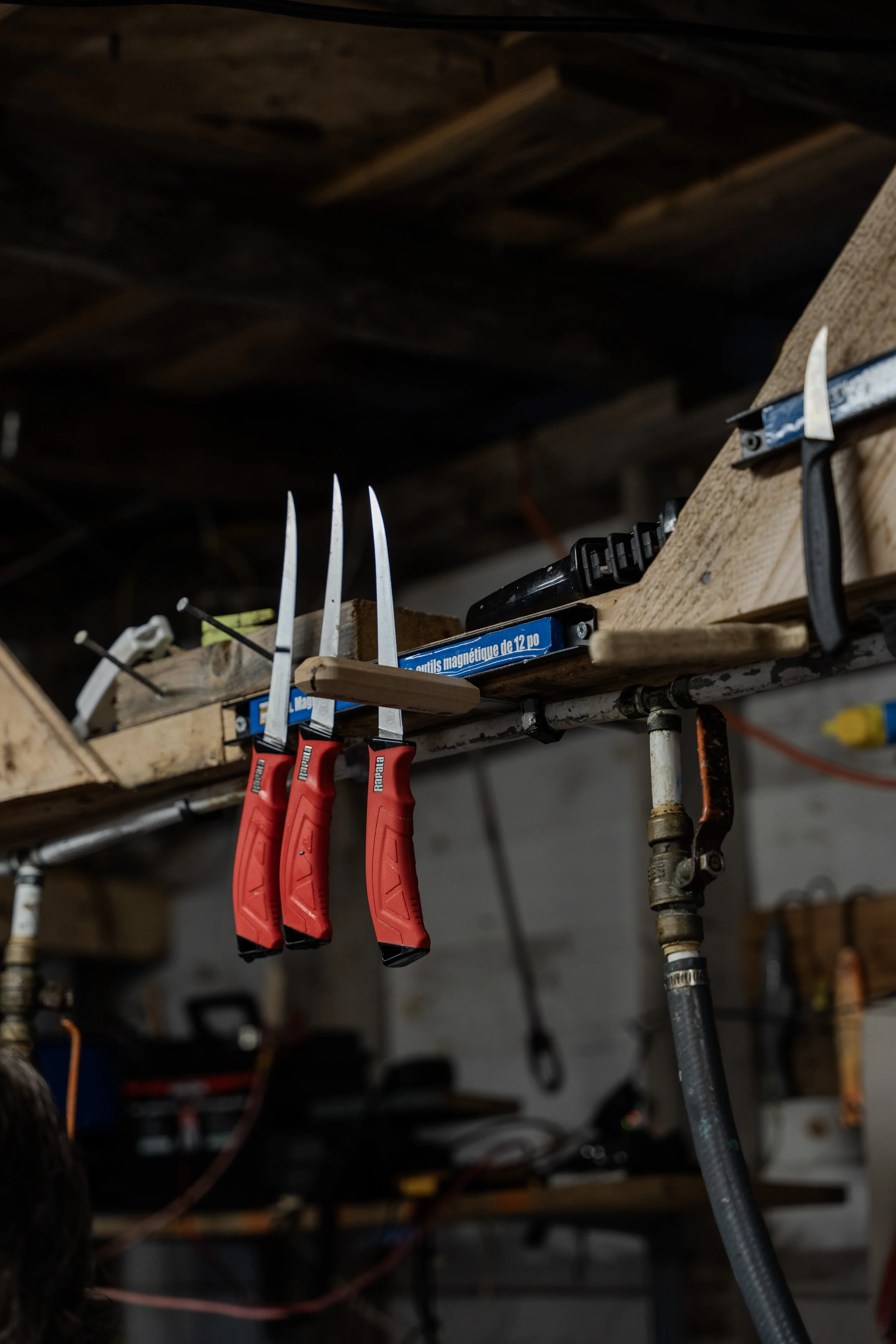
Back at the dock, women lift bins of freshly-caught cod up to the wharf, and into the room where Kelly and Vera set up the scale. Leo grabs a knife and readies to clean the fish. Kerri puts on the kettle for tea and hot cocoa, while Kimberly grabs her clipboard and pen.
“57.5,” Kelly says as she and Vera measure. “2.5 kilograms.”
Kimberly notes the weight and length on a record sheet. At the end of the year, as part of the license they hold, she’ll submit all of the records.
“Are we going to do the big one next?” Vera asks.
“8.3 kg”, Kelly says.
“90.4,” Leo adds.
“That’s a big fish!”
“I want to see what he’s been eating. Maybe a bonus fish!”
Once the fish are weighed and measured, cleaned and filleted, all of the participants will take some home to feed their families. The lessons continue beyond the boat and the ocean, beyond the room, to home where conversation around the dinner table might include triangulation or fishing techniques.
Just this one outing has touched on a range of learnings from small boat skills to navigating, marine biology to math. “There are so many career pieces that come into being out on the water and engaging in fishing,” Kimberly says, “so if you start engaging young people on the water you could spark their interest in any number of careers and then she’s going to bring some fish back to her family, then you spark their interest in where their food comes from. There are so many important reasons for us to introduce children to fishing, to make that investment and we should be doing it everywhere and not just on ocean coastal communities, Great Lakes coastal communities and other smaller lakes. There are just so many huge pieces wrapped up in taking kids fishing.”
To address access to fishing and fish processing—and, in turn, community—Kimberly and Kelly are working on a fish co-operative plan and have enrolled in co-operative school. “Every week we learn a different aspect of the cooperative movement,” Kimberly says. “It’s not easy to interface with a large fish plant so our co-operative could help address access.”
Vera takes a seat at the table and sips her hot cocoa. She chooses a snack from the basket on the table as conversation shifting from how to clean a fish to favourite parts of the cod.
The walls of this space are decorated with fish- and ocean-related art by program participants. A mural outside is currently in the works, by a local artist who started working with Fishing For Success as a summer student. At the end of the wharf, participating youth are running a citizen science project on marine and environment quality.
Catching fish is just one of the many benefits of Girls Who Fish and all the programs that Fishing for Success offers here at Island Rooms of Petty Harbour. This evening, these women have gathered to fish, to talk, to plan, to share, to be in community in this place and to sustain one another.
Girls Who Fish
Fishing For Success
Island Rooms of Petty Harbour
@islandroomspettyharbour
This piece can be found in Spring 2025, Edible Newfoundland and Labrador No 8
Thank you for reading! As a special spring treat we are releasing this story digitally. If you would like more early access to our stories in digital format we encourage you to consider becoming a member. Learn more about our membership plans click the button below.