
Words and photos by Jody Nelson
Growing a nimble food system
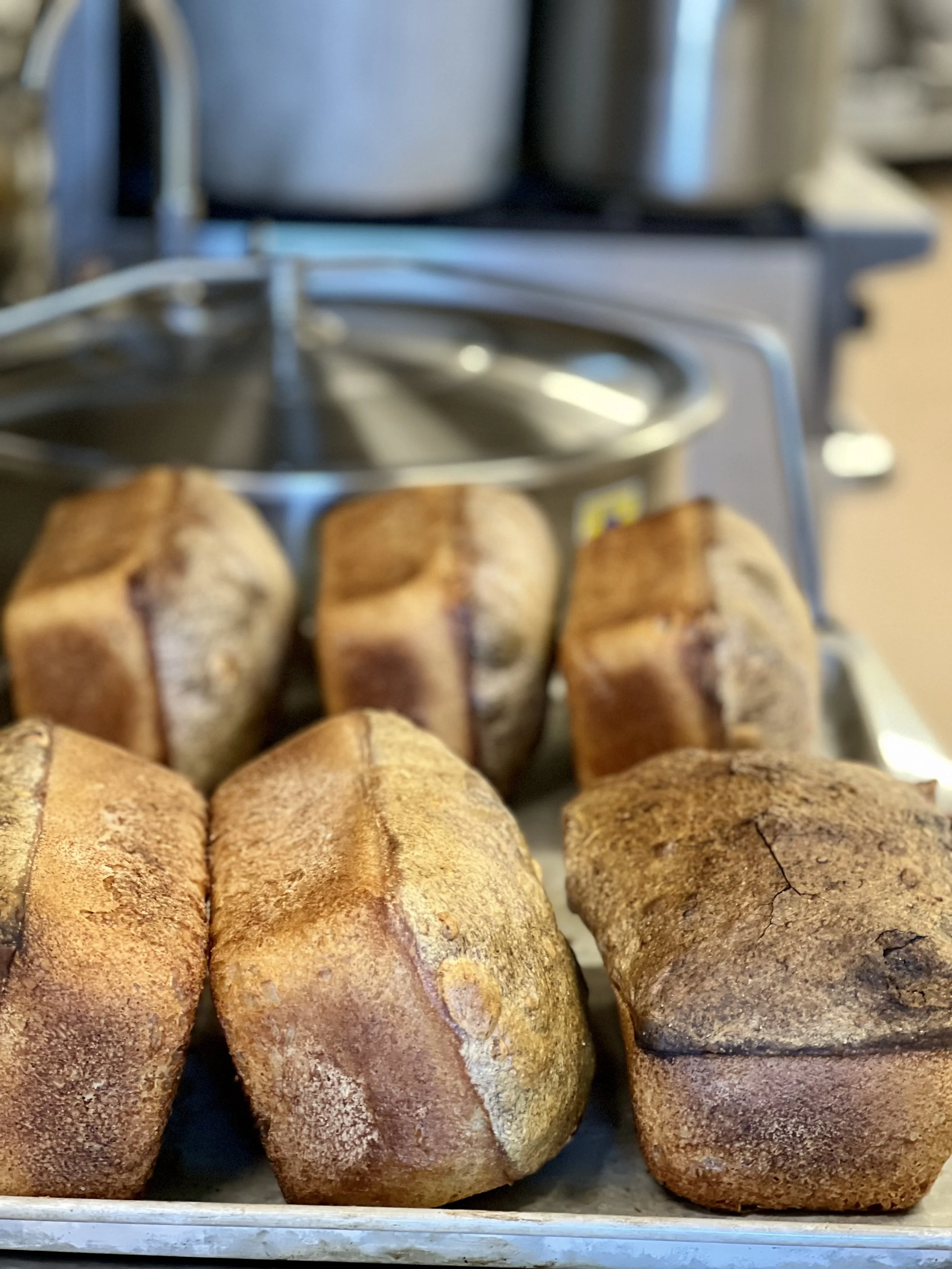
The Cape Breton Food Hub is celebrating its 10th birthday this year. When it began to take shape, most people in Cape Breton had never heard of food hubs. “I thought we had invented it!” says Executive Director, Leah Noble. She was a consumer member of the co-operative at the time, which has given her perspective on what customers are looking for, but she couldn’t have imagined what happens behind the scenes to make local food access on this scale possible. “When I came on, I didn’t realize the breadth of what was happening at the Food Hub and what the board and the existing staff had been able to accomplish. It's truly mind blowing.”
From the outside, the Cape Breton Food Hub is an online local food ordering platform and a storefront. Peering deeper, it is a local food aggregation and distribution network that spans the island. When you step inside, you see and feel that it is so much more. The Cape Breton Food Hub is creating an alternative food system centred around communities.
Cape Breton has really paved the way for food hubs in Atlantic Canada. Several successful food hubs that have popped up across the province over the years, some with mentorship from the Cape Breton Food Hub. Most are tackling a slice of the food system, like value-adding or distribution. “We’re doing all of the pieces all of the time!” says Leah, including farmer and consumer relationships through a co-operative model, aggregation, transport, redistribution of orders, processing in peak season, value-adding, and retailing. “In Cape Breton we tend to sell ourselves short, but in this realm Cape Breton is the leader provincially. We were first to take a chance on this. We are the birthplace of the cooperative movement so that plays into it as well.”
This scope and scale didn’t happen overnight. It all began as a simple, grassroots co-op, relying on volunteers every step of the way. It was a careful balancing act of getting in enough local supply, and having enough curious customers to provide the demand. Even at that scale, the logistics were demanding, but the purchase of a building in Bras D’Or took the operation to a new level of sophistication and possibilities.
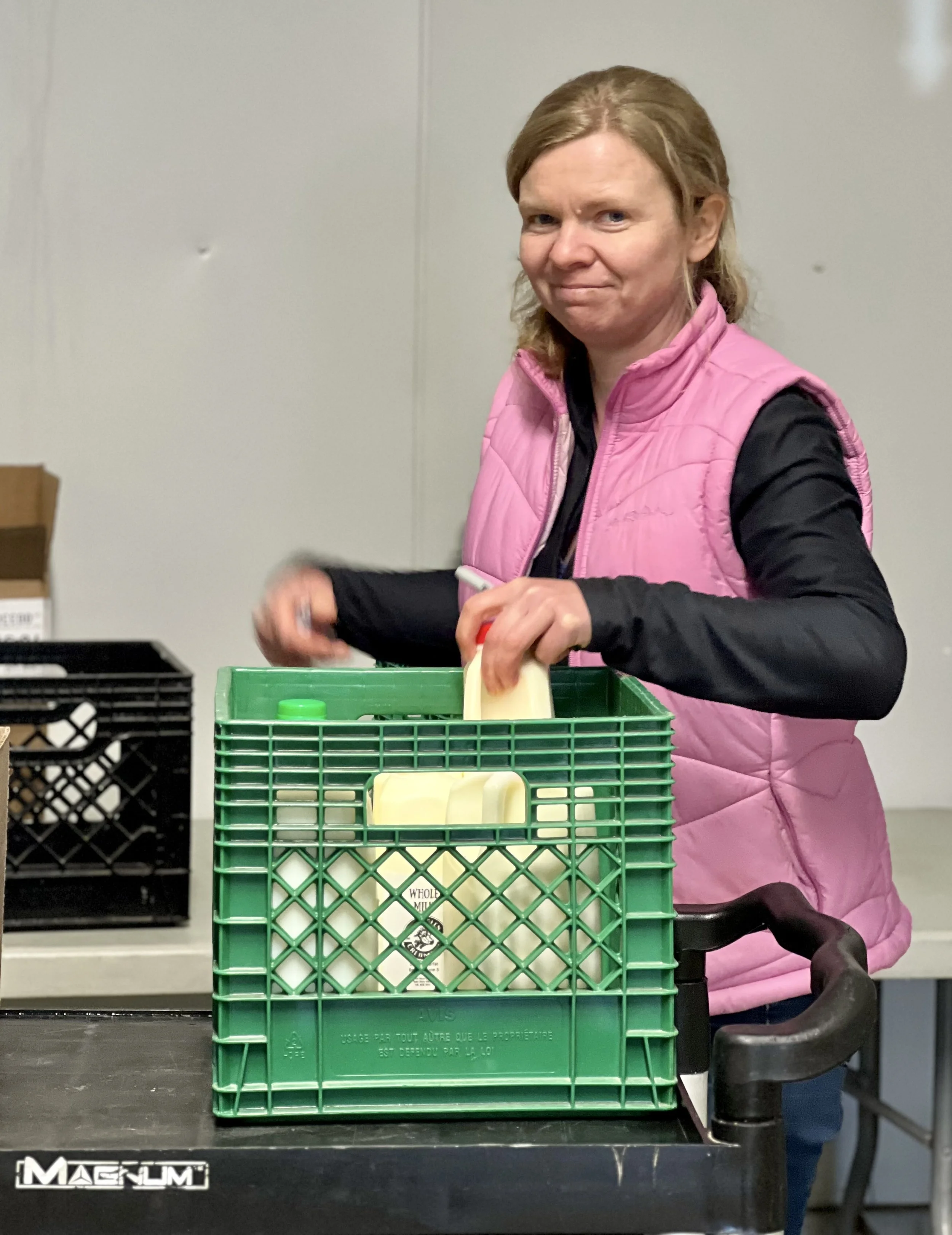
The purchase of the building happened during the pandemic. The retail store opened for a few months then had to shut down. Now the shelves are full and it is becoming a thriving community hub where people can come to get their groceries and chat with their neighbours. “Local community members around the Food Hub have missed having a store. There used to be a grocery store in the area and the building used to be a market,” says Leah. “People come in and they say ‘it’s so great I can get my milk, my bread, my eggs’…this is an area where we want to put even more energy—getting in even more grocery-store-esque staples for the community.”
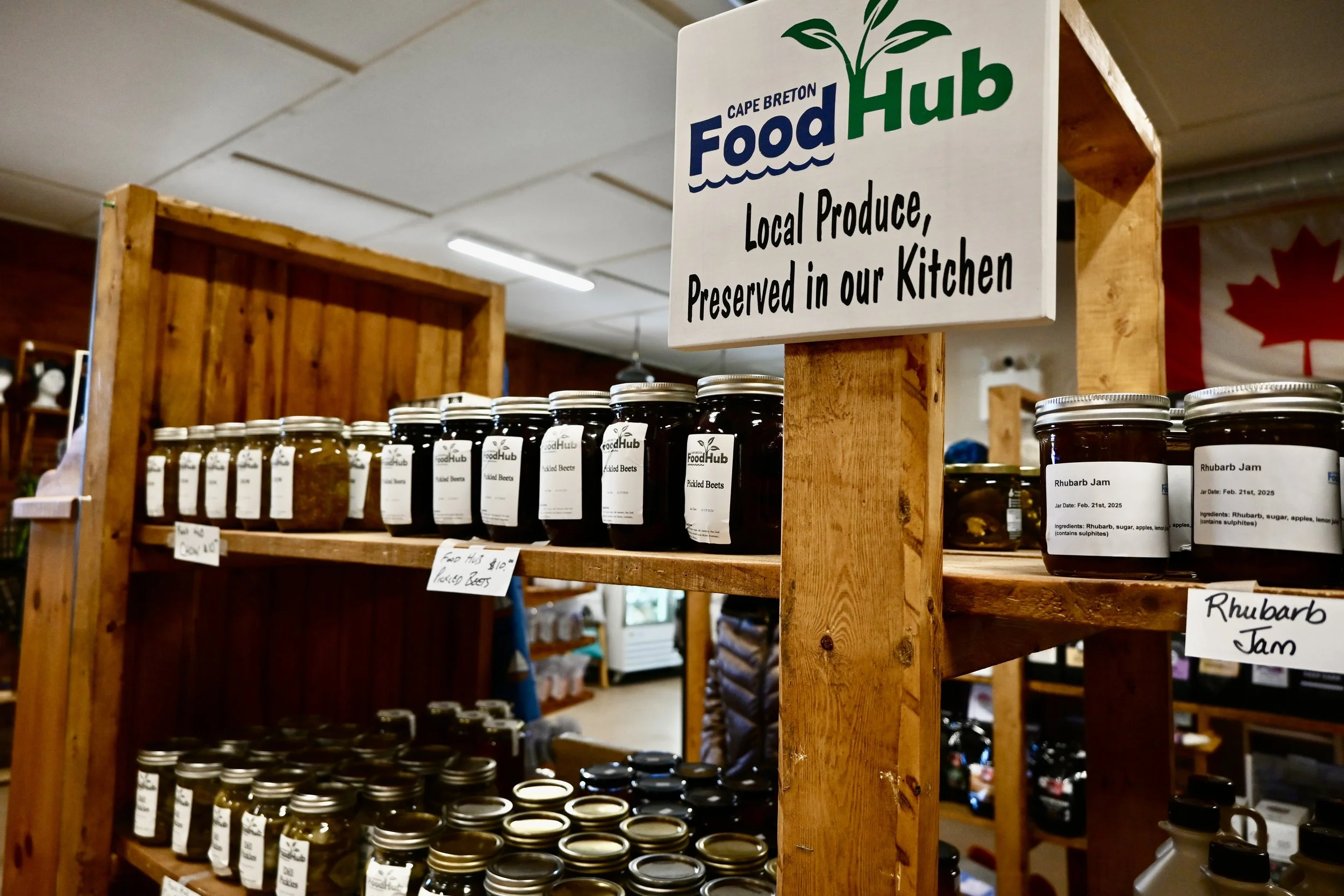
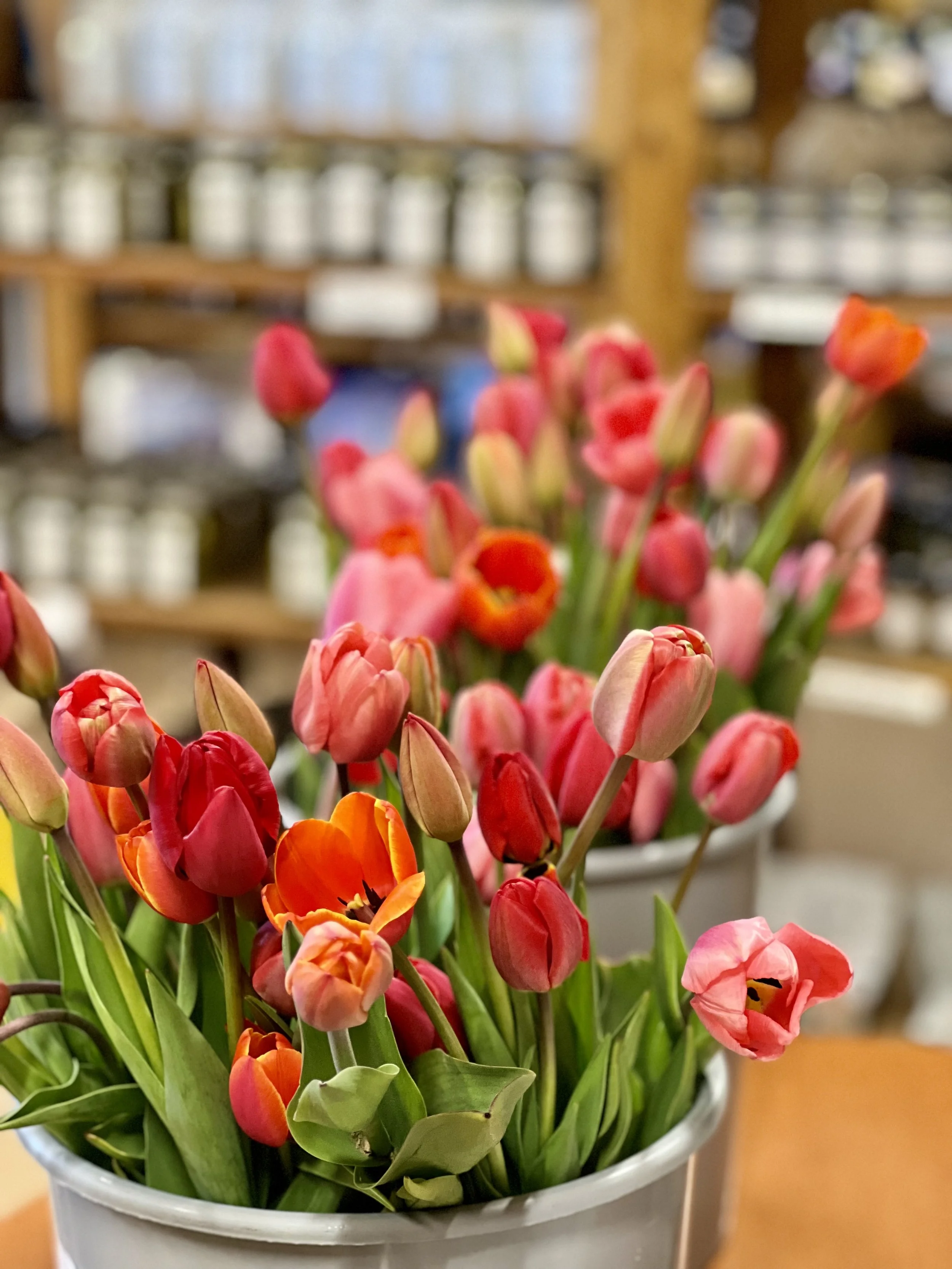
There is already an impressive diversity of local fresh, frozen and shelf stable goods. The commercial kitchen is in full use, with Red Seal chef, Marc Lyons, preparing a spread of take-home meals, such as soups, pies, and baked goods. You can also purchase frozen produce prepared on the Food Hub’s processing line, making these foods available year-round. There are even local crafts and flowers for sale.
Timing is everything. While the Covid pandemic brought many challenges to businesses, the Cape Breton Food Hub became more relevant than ever. The market dynamics that emerged during that time made barriers to food access rise into our collective consciousness. The Food Hub stepped into home deliveries and demand skyrocketed. On the heels of the pandemic, the deepening affordability crisis has shifted the priorities of the Food Hub. Their once-small subsidized food program, Share the Harvest, ballooned with the injection of $500,000 from the Provincial government, dollars that went directly towards feeding both people and our local food system. Now the threat and impact of climate events and tariffs are demonstrating the critical need for food supply resilience. These crises are changing the conversation and the sense of urgency. Local food was once the norm, then it became a luxury. People are now starting to see it as a necessity.
Food sovereignty, our ability to choose and define where our food comes from, has long been denied to typical consumers. We don’t question it because it is just so much easier to live within the system that has been created around us. “The main reason I took on this role and why I am passionate about local food, is that disasters, which are becoming more frequent, impact the infrastructure that brings our food here. How are we going to eat?” says Leah. “In order to do that we need to keep our farms going. It seems like a no-brainer but so much of the time we don't think about it…In the face of tariffs, this has been put under a magnifying glass. This is real.” We see how quickly things can change and when we are not in control of our food system.
The Cape Breton Food Hub plays a unique and critical role in creating greater food sovereignty but it really all comes down to our farmers. “When you look around at the capacity of a place…in Cape Breton we have tons of land, and it was all farms 150 years ago,” shared Leah, “People might ask themselves, why can't it be that way now? The answer is that there is a lot of red tape. It is not as simple as we would all like it to be.” Red tape, market forces, and compounding crises are forming a perfect storm.
Crises happen almost overnight, but raising cattle for meat supply or the planning, planting and growing cycle of produce requires steady demand to meet that supply. While the Food Hub has become more relevant and demand has increased in waves, inflation, affordability and climate events are hitting our farmers hard. We are seeing more and more farmers diversifying their way out of the field. They can no longer afford inputs or labour, compete with grocery store door-crasher prices, navigate complex regulation, or survive yet another weather-related set back. “Part of our work as the Food Hub is to help to educate the public on the value, and not just the dollar value…the true value of what it means to our communities to have food production happening here,” says Leah. “What is the true value of local food and how can we stop the erosion of the farming community and help to build it back up again?”
The Food Hub has been nothing if not nimble over the past ten years, creatively evolving in a changing world and marketplace, and responding to the needs of their cooperative members. This has required a tremendous level of commitment and care from the volunteer board members that have risen to these challenges. “The people on the board have definitely been believers from the get go,” says Leah. “They’ve been building the plane as we are flying it.” The many people that have dared to step into this innovative model and have nourished it through many highs and lows, are a critical piece of the growing success of the Food Hub. “We have an incredible team and we really are building this together. Everyone has compassion and grace. The Food Hub has never been at this level before and we are figuring it out as we go, together.”
If you are interested in getting involved as a consumer, producer or supporter, reach out on Facebook, Instagram, or email admin@pancapebretonfoodhub.ca. You can also drop by the store for a coffee and a chat at 1415 NS-105, Bras D'or, NS.
Jody Nelson stewards a piece of land on Hunter’s Mountain, Unama’ki, where she invests her heart in her farm, her two boys and her community. / Jody Nelson gère un terrain sur la montagne Hunter, Unama’ki, où elle s’investit de tout cœur dans sa ferme, ses deux garçons et sa communauté.
Read Jody’s piece in Issue No 15, Summer 2025.