
Words, Photos, and Recipe by Marsha Tulk
Let’s get to the marrow of it
Why the best taste and the oldest story lie right at the bone.
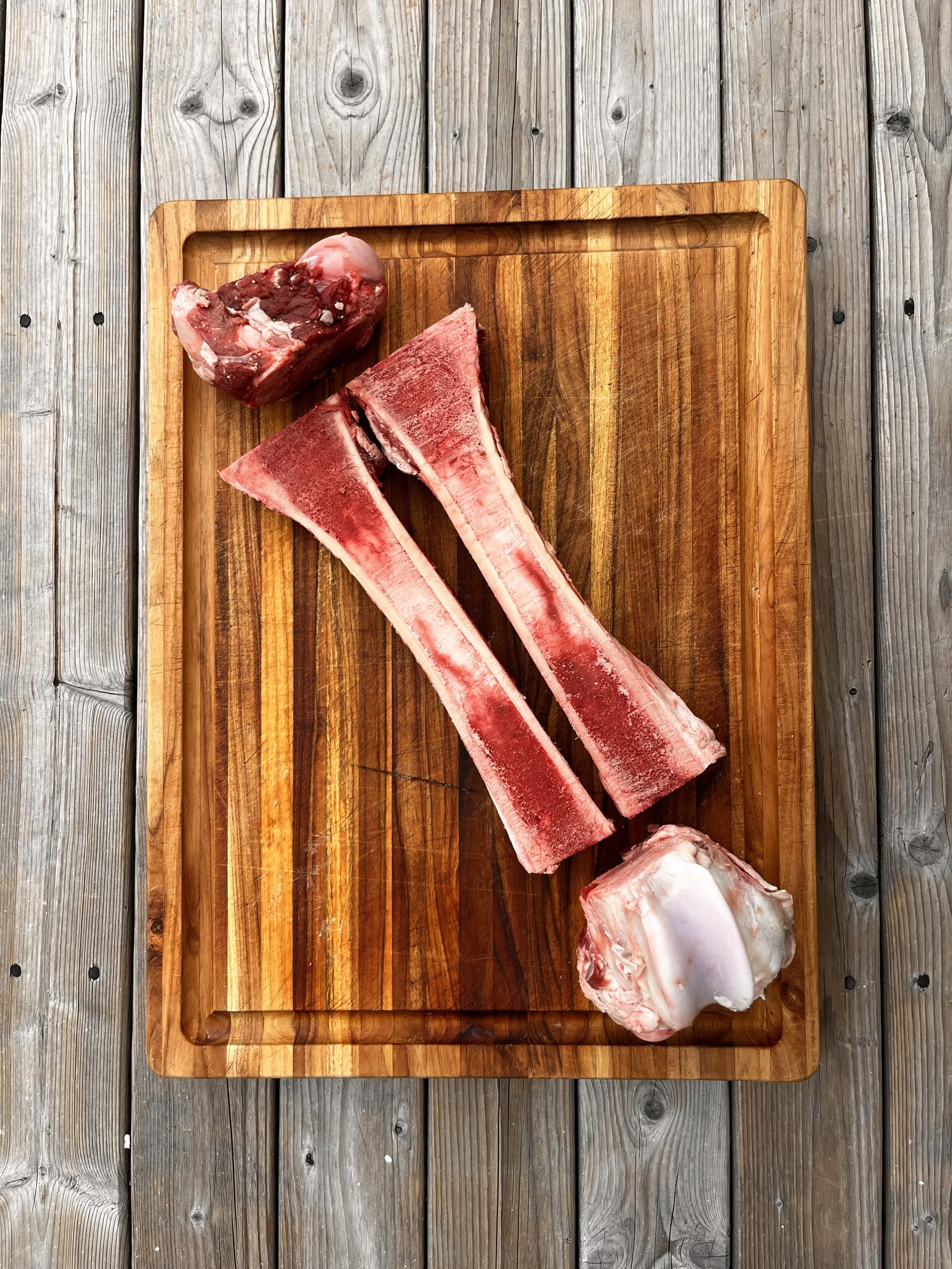
Moose bones with marrow
I struggled with how to make bone marrow sound appealing. It’s not exactly the sort of thing that makes you salivate on first mention, unless your my Labrador retriever who exudes a river at the mere hint of a marrow bone. My mother, for instance, screws up her nose like she’s catching a whiff of ripe cod liver oil, a reaction rooted in memories of her father coaxing the last bit of marrow from its protected centre. That was a time in Newfoundland when eating was a subsistence act, where nothing was wasted.
Bone marrow has never really left our kitchens—we just stopped calling it by name. Pea soup simmered with a ham bone, turkey soup from a Thanksgiving carcass, slow-braised short ribs, lamb shanks, or osso buco—all, in part, owe their rich flavour and silky texture to marrow. Even the current craze for bone broth is just an echo of what cooks have known for centuries: the best flavour lives in the bone, because that’s where the essence of flavour hides.
It may sound archaic or overly scientific, but bone marrow has nourished animals and humans alike for over 400,000 years. Early humans learned not only to hunt but to preserve unbroken bones for leaner times. When food was scarce, cracking them open provided enough energy-dense nourishment to carry them through to the next meal. It even inspired the creation of early tools, the first culinary instruments.
Marrow, after all, is concentrated life— the soft, rich tissue found at the core of thigh, hip, and spine bones, where stem cells generate the very building blocks of blood. When roasted, it’s smooth, buttery, and intensely satisfying. One tablespoon (14 grams) of raw moose bone marrow provides about 110 calories, 12 grams of fat, and 7% of your daily vitamin B12, along with iron, vitamin E, collagen, and trace minerals. Bone marrow, when well-cooked, is even included on the list of solid foods that can be first introduced to babies. Moose bone marrow even contains linoleic acid, a beneficial fat thought to reduce inflammation and support the immune system.
Bone gives us form—marrow gives us life. Our ancestors may not have known those specifics, but they understood its worth instinctively. Marrow was energy and survival—dense, sustaining, and intensely satisfying.
Culinary uses for marrow are as old as cooking itself. What was once survival food has become not only a sign of modern steakhouse fine dining but a necessity for flavour, and for the bottom line—nothing goes to waste in the restaurant business. Any decent steak house has canoe-cut marrow “boats,” roasted and served with crusty bread. I have recently learned a new take on this—sugar coat “brûlée” the surface for that sweet crust over a savoury, creamy centre. In the kitchen, marrow behaves like butter in more ways than one: you can whip it, clarify it, or blend it into compound butters. Stir a spoonful into a sauce to create a velvety texture or blend it into focaccia dough for richness and depth. It’s a natural flavour enhancer—doing what butter does, but with an earthier, more soulful dimension with added nutritional benefits. I’ve even made a “bone marrow candle” that melts luxuriously over grilled meat or roasted vegetables. The essence of marrow is the essence of meat flavour itself.
Here in Newfoundland, our culinary landscape is shifting. In The Cook Not Mad; or Rational Cookery, first published in 1830 and perhaps one of North America’s earliest cookbooks, suggested that “Recipes are adapted to the meridian in which it is intended to circulate.” But here that’s no longer true—Newfoundland foodways have become global stories. My own cookbook, with Lori McCarthy, Food Culture Place, won first place in the world at the Gourmand Cookbook Awards for Food Culture in 2022. Chef Jeremy Charles’ Wildness cookbook, published by powerhouse Phaidon, also carries Newfoundland flavours to international readers. And ingredients travel just as far. Fogo Island hand-line cod travels to YDF on its way to be served in Toronto restaurants within 24 hours of being caught. Our cuisine has evolved from regional sustenance to cultural expression. It’s no longer just eating—it’s living through experience. And at the bone of that evolution is connection: to land, to ingredient, to the people who bring food to the table.
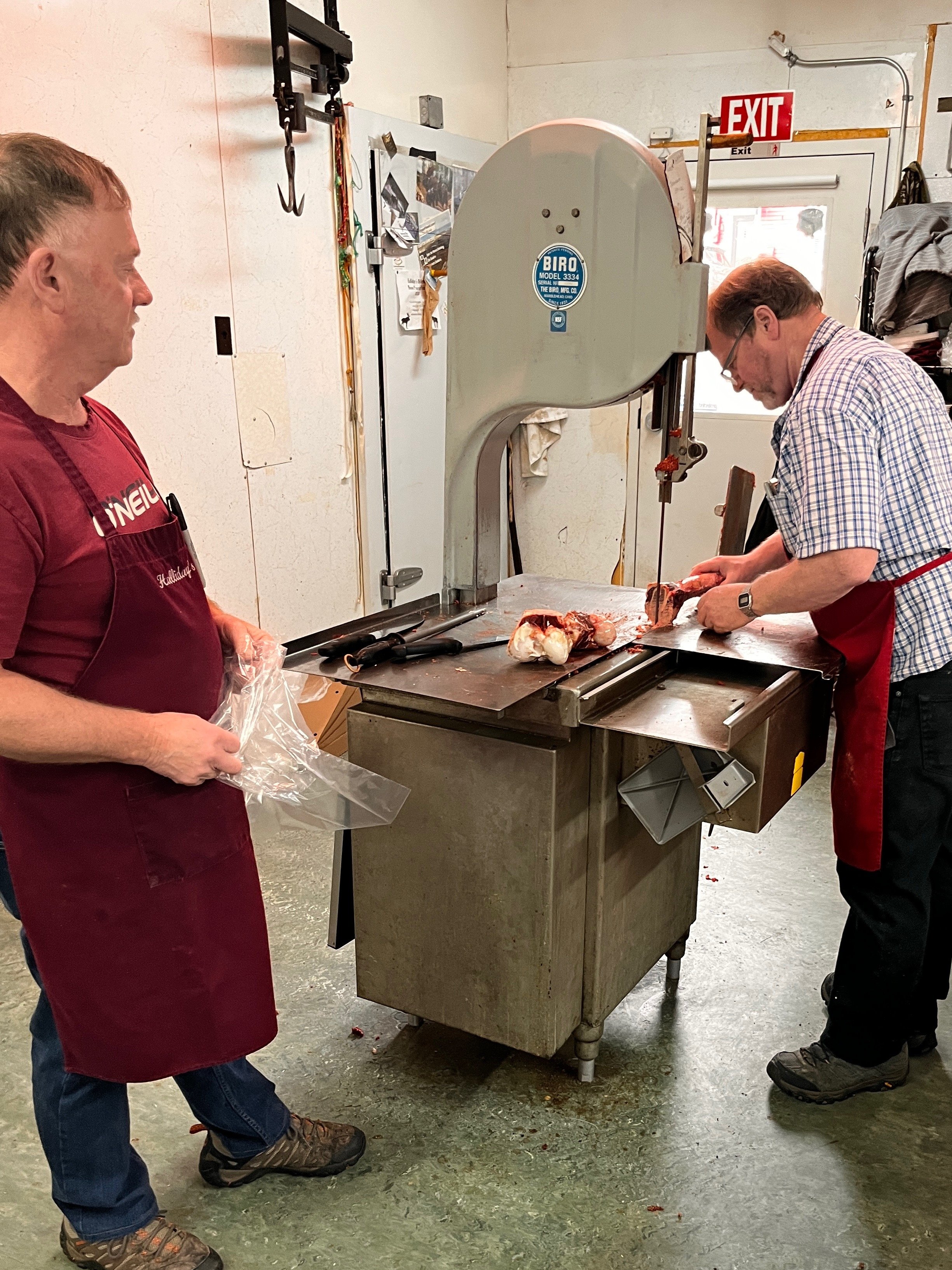
When I think of marrow today, I think of a dish that ties together tradition and innovation. Recently, I made a lamb-and-rosé wine version of my moose osso buco recipe published in the Winter 2024 edition of edible Newfoundland & Labrador by using lamb neck cuts from Bomber’s Butchers in Corner Brook. Owner, Jason Whittle, sourced the west coast lambs from Karen and Gary Fillier of Lock Leven Farm—South African Dorper breed of sheep known for tender, delicate flavoured meat shaped by the salty west coast air of the Highlands on one side, St. George’s Bay communities on the other, and the Highlands River running right through the middle. Braised low and slow with root vegetables, finished with a bright mix of fresh mint, parsley, and preserved lemon peel. The marrow in these bones transformed the broth into something silken and deeply satisfying—a taste of both place and patience. The dish was proof that cooking, at its core, is an act of care—drawing strength and flavour from what lies deep within. Proof that marrow-rich cuts still hold a magic.
Bone marrow is a food of necessity, and a source of connection—to food, to history, and to the craft of cooking itself. Eating these often ignored sources isn’t just nourishment, it’s about using every part gifted to us, respecting both the animal and the skills necessary to harvest, regardless of whether it was commercially raised or ethically hunted. My journey through this article just happens to go to the very marrow of the matter.
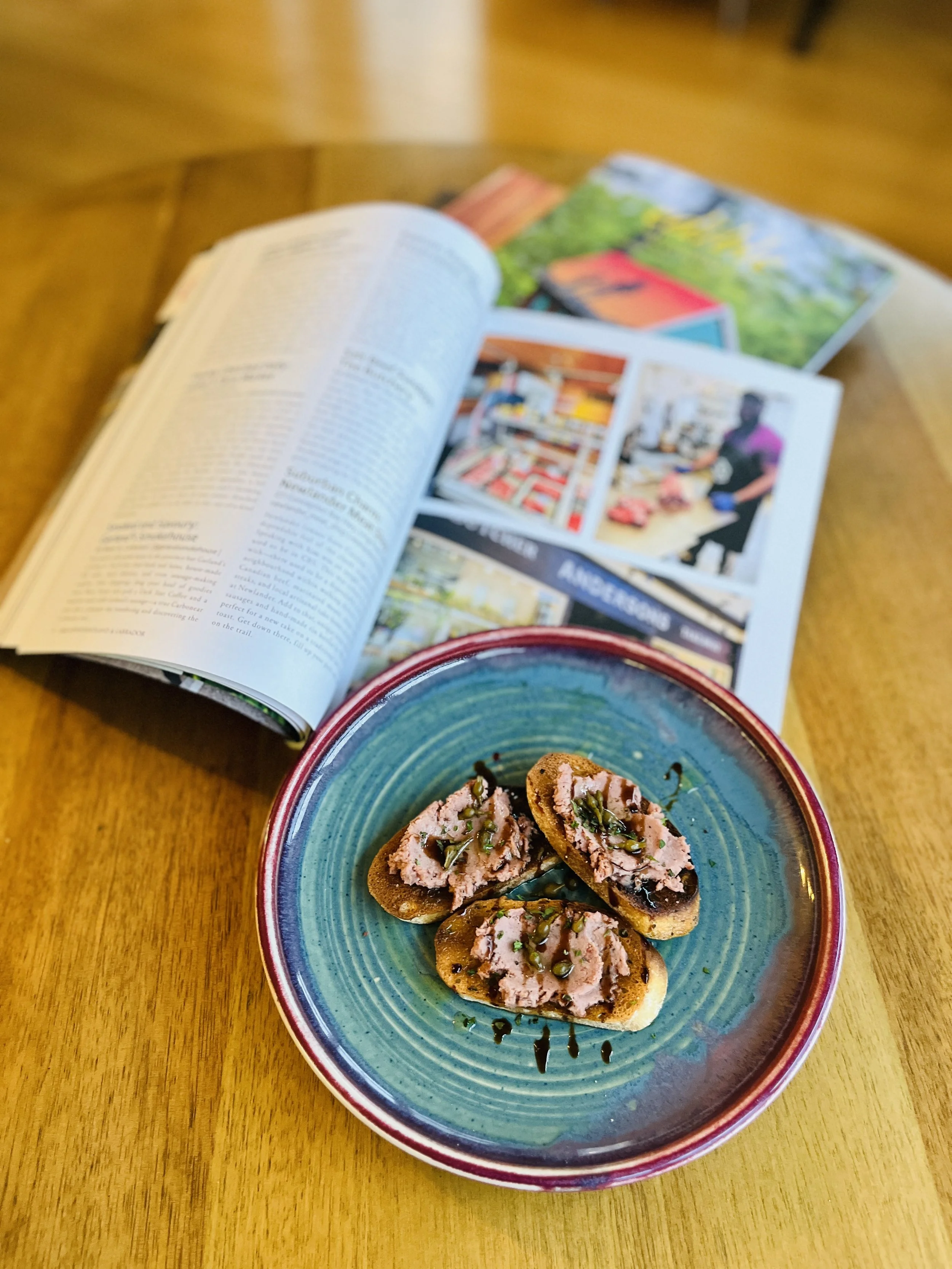
Moose Spuma
My husband told me that this year’s moose hunt was a weathered challenge — wind, rain, and patience tested in equal measure — but the reward is worth it. From that harvest, I saved a few marrow-rich bones to blend with my own moose mortadella for an Italian-inspired dish that feels both rustic and refined. Think of it as the culinary equivalent of good stock — resourceful, deeply flavoured, and endlessly adaptable.
225 grams moose mortadella, cubed small (great way to use up those misshapen ends)
¼ cup whole-milk ricotta
¼ cup roasted moose marrow
¼ cup heavy cream
Freshly grated nutmeg, to taste
Freshly ground black pepper, to taste
Place mortadella in a food processor and pulse until smooth. Add the ricotta, moose marrow and cream and pulse until smooth. Season with nutmeg and pepper.
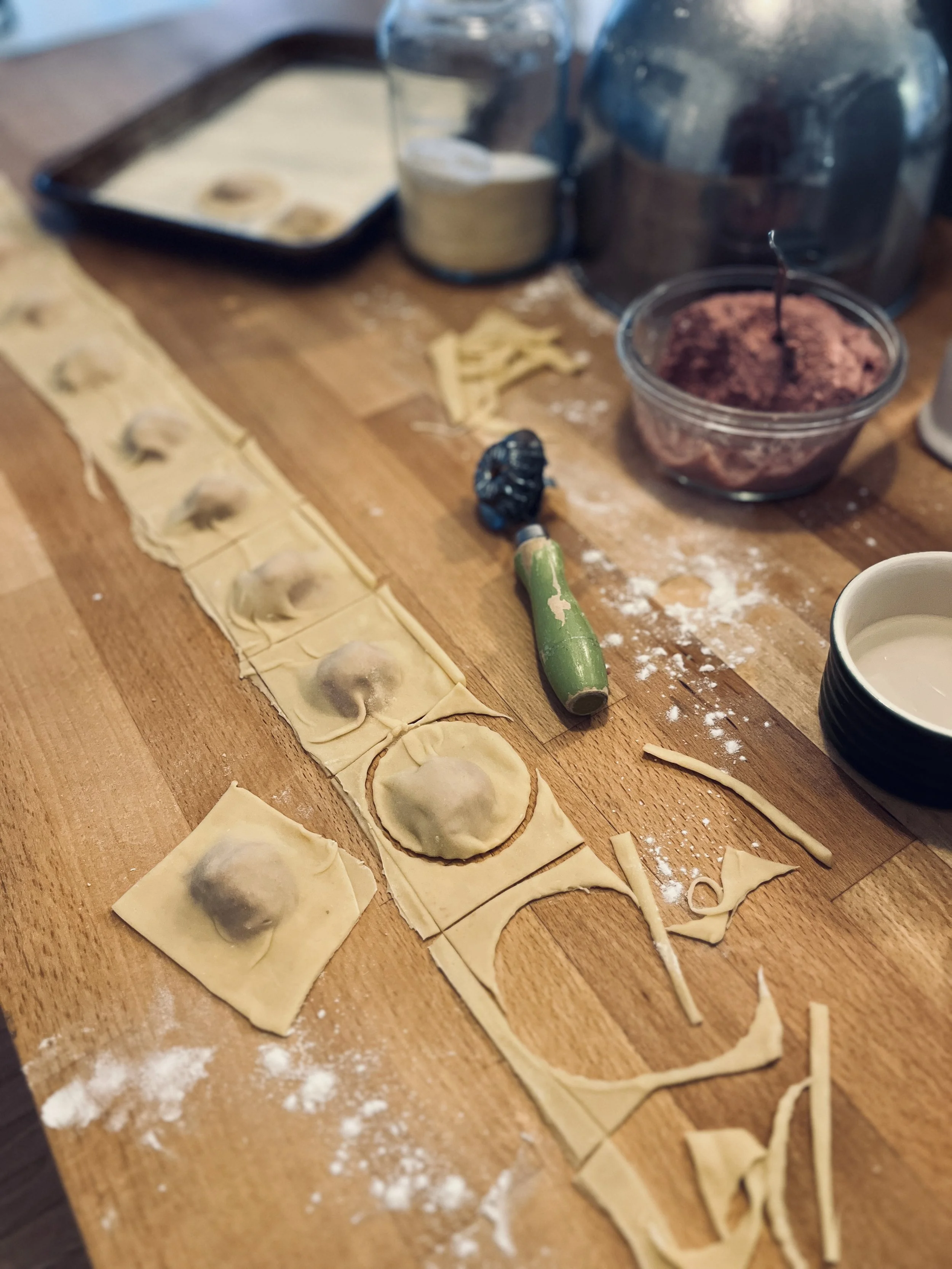
Three Ways to Serve Moose Spuma
This spuma lives three lives: elegant enough to serve as hors d’oeuvres, hearty enough for breakfast, and refined enough to fill a pasta. For those without access to moose, beef marrow bones, and your favourite mortadella or salami, make an equally rich substitute.
As an hors d’oeuvre:
Whipped until light and velvety, the spuma spreads easily over crisp crostini or toasted sourdough. Drizzle with good olive oil and a few drops of aged balsamic and finish with a high scattering of flaky Newfoundland Company Sea Salt. It’s a small bite that feels indulgent — earthy, rich, and unmistakably wild.
At breakfast:
Fold a generous spoonful into softly scrambled eggs or spread it over warm homemade toast or a touton alongside pickled onions or a sharp mustard. The depth of this addition turns a simple morning into something worth lingering over.
As a pasta filling:
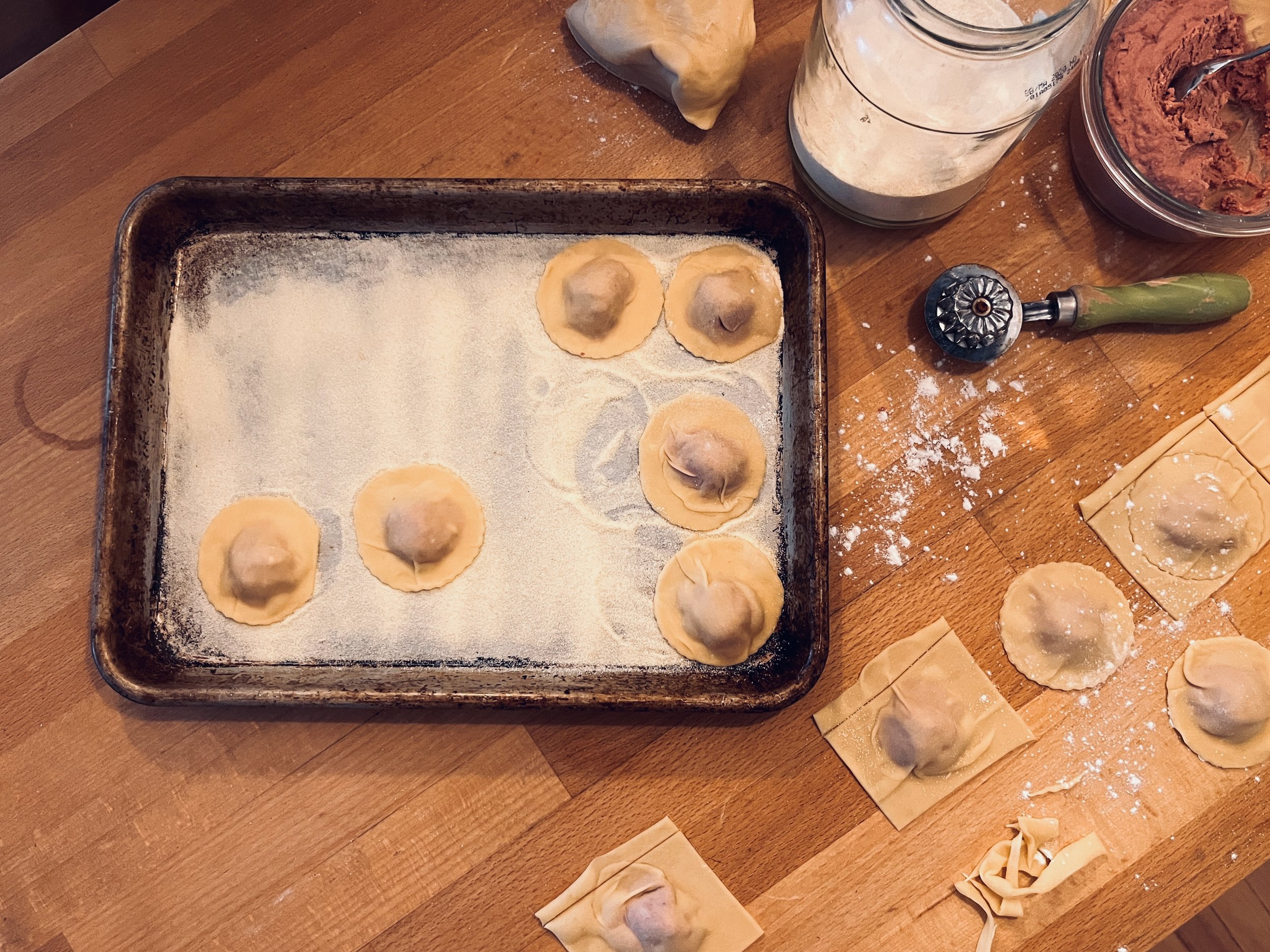
Use it to fill ravioli or agnolotti, pairing it with a light butter and sage sauce or a drizzle of browned bone marrow for extra richness. It’s a reminder that thrift and luxury can live beautifully in the same bowl. 🫎
Marsha Tulk is a photographer, recipe developer and award-winning author of Food Culture Place.
foodcultureplace.ca | @foodofgenerations